150cm gibertini dish,echostar 8700 analogue receiver to move dish,motor jaeger 1224,also black ultra ku lnb and esx241 c-band lnbf and technomate 5402hd ci+ super also added a Dr HD f15 receiver
Gibertini dish 1.55 Χ 1.66 ( 100.5°E -45.0°W) ku lnb Inverto Black Ultra 0.2db - Ku band Circular Uni Inverto BLACK Pro 0.2db / / C-Band lnb Titanium wide band - Pauxis 13°- K Panorama 13°K
DR.HD F-15 - Openbox S11 HD - TM-5402 HD M3 & M4
Gibertini dish 1.55 Χ 1.66 ( 100.5°E -45.0°W) ku lnb Inverto Black Ultra 0.2db - Ku band Circular Uni Inverto BLACK Pro 0.2db / / C-Band lnb Titanium wide band - Pauxis 13°- K Panorama 13°K
DR.HD F-15 - Openbox S11 HD - TM-5402 HD M3 & M4
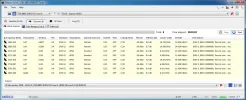
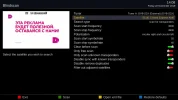
I did not get any more done today re scanning this satellite. However, it looks like this evenings signal levels are reasonable as I managed to lock 8 frequencies in an EBSPro scan.
If I get time tomorrow I will switch the LNB over to the WiMax version and run a scan using a shorter length of WF100 cable and one less A/B switch in the line. Hopefully, I might manage to lock one or two more frequencies that are currently around 1dB under the level for a lock.
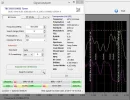
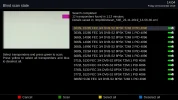
Tonight's EBS Pro blind scan is attached below (filter applied to exclude ACM).
I switched over the LNB to the WiMax version and recorded the signal levels before and after the switch over. In addition, I used a 12 metre shorter cable run with one less A/B switch in line.
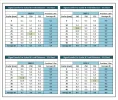
The signal levels improved marginally using the shorter cable run and one less A/B switch. However, when comparing the non WiMax LNB with the WiMax LNB some signals levels decreased and others increased. There seems to be a trend whereby most signal levels of 3739 MHz and below were stronger on the non Wimax LNB and most signals of 3758 MHz and above were stronger on the WiMax LNB. Some of the signal level gaps were normal fluctuation, others were slightly more noticable.
The WiMax LNB is specified for 3700 - 4200 MHz, the non WiMax LNB is specified for 3400 - 4200 MHz. I guess the results are probably as expected with the WiMax version having marginally poorer signal levels for frequencies below its specified range?
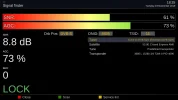
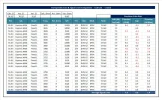
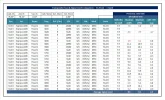
This mornings scan result table is attached below. The readings were taken from the signal level indicator of a Dr HD F15 receiver. There is not much more I can do with this satellite apart from tweak the feed/scalar pair distances. On to the next...
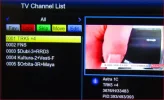
As a last test on 53.0 East I checked the feed/scalar pair distances to see if I could improve overall signal reception from this satellite. However, I did not get anything of note from this test. I have attached the final 3 pictures from my testing on 53.0 East below.
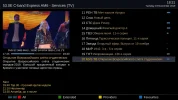
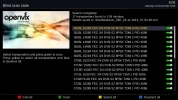
The Edision Nino Pro managed to lock 8 T2-M1 frequencies and the Dr HD F15 showed 9 frequencies to be above a lock level. That is coherent with other comparisons between the Nino Pro and the F15, IMHO, the F15 has the better tuner.
Even though I said in my previous post above that I had finished testing this satellite I had a niggle that it had more to give. The final sets of signal levels were for a meridiem test to see if there was a favourable time of day for peak reception at my location. From recording signal levels at AM and PM it looks like AM is the best time. The PM signal levels were recorded Friday evening, the AM signal levels were recorded this morning.
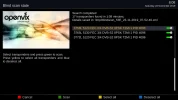
I have attached the final scan result table below and a couple of screen grabs from the Edision Nino Pro blind scan. That is definitely it from me on this satellite, on to the next...
This site uses cookies to help personalise content, tailor your experience and to keep you logged in if you register.
By continuing to use this site, you are consenting to our use of cookies.