Analogue Nagravision (Syster) encoder

PAL have a burst to synchronize the colour referenz oscillator and demodulate the PAL Colour QAM signal. Each PAL colour signal are in each line. SECAM is a memory system and remember the lines back so the 1st line have Colour Dred and the 3rd line have cColour Dblue. A Memory coil (64µs) will remember the colour signal for the next line and decode it. The SECAM Colour Signal is in FM. That is the reason why the Start point of the SECAM is after the horizontal synchron. A permutation must be begin after the H-synch. In PAL the burst reference will not change the position in case of bad signal quality during sampling the Burst. The Brust must have 4,43361875MHz exact and not a other Phase Position so the Colour will be demodulated in a good Quality back. Colour on Descrampled signal is worst in case of the 8bit ADC/DAC and the bad Blacksholder Sample&Hold. The Signal was not clamp good so the Signal is worst.
We can scramble a Video for Youtube and share it hahaha. Example a program what ever scrambled and record in Youtube we must bring in the control data inside the first view line - after playing and decode we must blanke the first line - nobody will see this blinky black/white lines information. A block scramble will be OK cube scramble.
 
Last edited:
Old frequency charts identified the encryption system of Canal+ Espana as Nagravision & Videocrypt.
I didn't receive this channel back then, but maybe this cut&rotate function was used on this channel.

How weird. I wonder if someone mistook whatever c/r system was used for Videocrypt?

I read something about this recently, and I think I can fill in the blanks!

This Hispasat analogue transmission of Canal+ España was encrypted in both Nagravision and Videocrypt.

Basically, this version was never intended for public reception, but to feed the analogue terrestrial transmitters of Canal+ in Spain.

The Canal+ channel was encrypted in Nagravision for the end users who received it via terrestrial, and then this already encrypted version (maybe with some FTA 'windows' like the French version) was encrypted again in Videocrypt before being uplinked to Hispasat. The Videocrypt would have been decrypted before transmission at each transmitter site, just leaving the Nagra.

As you can see on that SATCODX chart, both Antena 3 and Telecinco (the two other national Spanish private terrestrial channels) were also on Hispasat in Videocrypt at that time, as these were also feeds for the transmitters by Retevisión (precursor to Abertis/Cellnex!), again not intended for direct reception, so the same happened with these (decryption at the transmitter sites).

I'm guessing the end result of the double encryption-double decryption on Canal+ didn't look great!
 
I found a brand new never used Canal+ Syster Sagem decoder with a gray key. I understand the device does not accept a wafer card and the gray key can not be activated at this time. Can I use a premiere key in it? It is a bit pricey and would like to avoid buying it if it is useless.
 
Sagem will work with a wafer card but you need to cut a small slot at the front. Once you have it apart, you'll see what I mean. The actual card reader takes both types - "key" types and normal smartcard shaped.

Grey key maaaay work - really depends on the type that it is.
 
I read something about this recently, and I think I can fill in the blanks!

This Hispasat analogue transmission of Canal+ España was encrypted in both Nagravision and Videocrypt.

Basically, this version was never intended for public reception, but to feed the analogue terrestrial transmitters of Canal+ in Spain.

The Canal+ channel was encrypted in Nagravision for the end users who received it via terrestrial, and then this already encrypted version (maybe with some FTA 'windows' like the French version) was encrypted again in Videocrypt before being uplinked to Hispasat. The Videocrypt would have been decrypted before transmission at each transmitter site, just leaving the Nagra.

As you can see on that SATCODX chart, both Antena 3 and Telecinco (the two other national Spanish private terrestrial channels) were also on Hispasat in Videocrypt at that time, as these were also feeds for the transmitters by Retevisión (precursor to Abertis/Cellnex!), again not intended for direct reception, so the same happened with these (decryption at the transmitter sites).

I'm guessing the end result of the double encryption-double decryption on Canal+ didn't look great!
I just found this spanish forum:
I can read it only with google translate, but it seems like this was a modified version of the videocrypt system. It is still not clear for me was it recognisable with a standard videocrypt1 (or2?) decoder or not?
I remember also CablePlus on Kopernikus2. This was definitely a videocrypt2 encrypted channel but only for CATV headends.

What about Cinemania2 in Nagravision? Was it a DTH transmission for Sogecable subscribers on Astra?
 
I just found this spanish forum:
I can read it only with google translate, but it seems like this was a modified version of the videocrypt system. It is still not clear for me was it recognisable with a standard videocrypt1 (or2?) decoder or not?
I remember also CablePlus on Kopernikus2. This was definitely a videocrypt2 encrypted channel but only for CATV headends.

What about Cinemania2 in Nagravision? Was it a DTH transmission for Sogecable subscribers on Astra?

Thanks for that link! That confirms the "double-encryption" (until later on at some point before that thread was created - when the Videocrypt was obviously removed, just leaving the Nagravision as went out via the terrestrial transmitters).

On there they also confirm the mid 1970s-early 1990s C-Band feeds of TVE La 1 and later TVE La 2 via Intelsat 34.5°W to the Canary Islands which was something I'd seen about before.

Regarding the type of Videocrypt, that thread seems to say that it was a type of Videocrypt 2 that was modified by Retevisión (Spanish transmitter operator). They mention the (Lyngsat-famous!) J. Puigs having a Videocrypt 2 decoder which didn't manage to decode the Antena 3 and Telecinco Videocrypt feeds as evidence of it being modified in some way.

They do seem to like their own systems for distribution in Spain! Remember the DVB-Retevisión format on 30°W about 15 years ago with the Spanish DTT feeds? Then of course nowadays that's become another 'unique' system as the current BISS PID-encapsulated Abertis/Cellnex feeds!

I believe the analogue Cinemania 2 etc. on Astra 1 were for DTH reception, but they may have also fed Spanish cable networks.
 
Some Nagravision Syster boxes can operate in a double scramble mode, both line shuffle and cut-and-rotate at the same time. It could have been this mode. If there are any VHS recordings of this we could tell from the VBI.
 
Some Nagravision Syster boxes can operate in a double scramble mode, both line shuffle and cut-and-rotate at the same time. It could have been this mode. If there are any VHS recordings of this we could tell from the VBI.

I’m pretty sure the Spanish Canal+ system was just a regular Nagra/Syster system for end users, but encrypted again in a professional form of Videocrypt 2 (as were the otherwise clear Antena 3 and Telecinco feeds at the same time) by Retevisión for their distribution over satellite to terrestrial transmitters in parts of Spain.

Again according to the thread linked to by @orizatriznyak they could apparently tell when an analogue terrestrial transmitter for these channels was fed by satellite as there were Videocrypt remnants at the edges of the picture in the decrypted broadcast signal! Whereas the transmitters that were fed by microwave/fibre had a ‘clean’ picture.
 
which didn't manage to decode the Antena 3 and Telecinco Videocrypt feeds as evidence of it being modified in some way.
Does it mean the decoder couldn't recognize the signal as videocrypt2 (no "please insert card" message)?

If there are any VHS recordings of this we could tell from the VBI.
There are 2 videos on youtube related to this topic. One from a person who catched a videocrypt decoder glitch on TeleCinco:
and an another video from a swiss guy named 625line:
We could ask them if they could capture the vbi from the tape to make it clear was it really a videocrypt encryption or not.

According to @Adam792 it is clearly to see the videocrypt remants at the edge of the picture on the first video.

I have mentioned in the videocrypt topic before here in Budapest an MMDS system was operating for 5 years using the dalvi encryption system. The encrypted image looked exactly the same as videocrypt, but the (cardless) CA system was totally different.

 
Last edited:
OK that's definitely Videocrypt - at least the scrambling system itself. CA could be absolutely anything.

Interesting read - I didn't know anyone used Videocrypt in Spain and especially in professional settings.
 
Does it mean the decoder couldn't recognize the signal as videocrypt2 (no "please insert card" message)?


There are 2 videos on youtube related to this topic. One from a person who catched a videocrypt decoder glitch on TeleCinco:
and an another video from a swiss guy named 625line:
We could ask them if they could capture the vbi from the tape to make it clear was it really a videocrypt encryption or not.

According to @Adam792 it is clearly to see the videocrypt remants at the edge of the picture on the first video.

I have mentioned in the videocrypt topic before here in Budapest an MMDS system was operating for 5 years using the dalvi encryption system. The encrypted image looked exactly the same as videocrypt, but the (cardless) CA system was totally different.

The user who has posted that first video seems to be in the Canary Islands judging by their other videos (lots of TVE Canarias, Antena 3 Canarias etc VHS captures). Their description/comments say that it’s a recording of Telecinco via terrestrial, showing a glitch where the Videocrypt decoder at the transmitter site obviously briefly stops unscrambling the signal. Hopefully they may have the original VHS tapes if you get in touch!

The second video is a capture from the feed itself via Hispasat, while it was “briefly unencrypted” according to the description. So no Videocrypt there.
 
That used to happen on Dublin cable every now and again.

The UK terrestrial feeds for the cable network was received via microwave link from Dundalk, which got it from Divis. If that link went down for any reason, they switched to an off-air MMDS feed from Naul. You always knew when that happened because the MMDS feed was scrambled with Cryptovision, so you'd see the likes of BBC 1 go scrambled for a few seconds before clearing again.
 
Hi, I just found a Premiere Syster G1 Sagem.
How can I use it to try cut and rotate?
@ Stefanvl premiere key works well in a french C+ syster.
Thanks
 
I think cut and rotate on its own only works on G2 (I.e. the decoder, not the cable receiver). It does, however, work together with shuffle on G1 but you need to enable both scramblers for it to work.
 
I also own a G2. However the led does not light up and I do not know how to look to identify the origin of the failure. If it's just a capacitor I can change it.
 
So I have to open the device and look for the references to replace them. I don't like to open the syster because the plastic parts are fragile
 
They are a pain to open, yeah. Just make sure it's fully working before snapping it all back together,
 
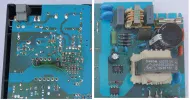
Hello, I finally managed to open it but I broke a plastic clip.
The power supply board worries me because it has areas where there has certainly been overheating. Is this also present on other models? is this a sign of the final end of life? How do I test the items to identify the problem? Thank you for your help.alim.webp
 
Back
Top