Antenna thread

Some more pix for you ..
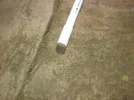
Showing the base plate 13cm diameter ...
resigned with a pan handle which will bent at 90 degree to allow bolt attachment ..
Plus the 40mm stop end ...
flooded with liquid plastic ..and drilled and bolt mounted to the base plate ..
This allows the actual inner 40mm core of the antenna to push fit and stand upright ..
The outer 50mm sleeve then goes on and is sealed in place ..
50 ohm connection underneath the baseplate
rgds
VSDSCF0008.webp
 

Attachments

  • DSCF0009.webp
    DSCF0009.webp
    108.5 KB · Views: 13
  • DSCF0010.webp
    DSCF0010.webp
    108.6 KB · Views: 13
  • DSCF0007.webp
    DSCF0007.webp
    121.7 KB · Views: 14
Last edited:
A quick indoor test of the antenna ..is seeing planes with RTL1090 ..as far South a Stoke..
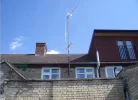
So ..'tis working ..but can't wait to get it finished and outside ..hi up above the gutter..
;)
 
Rumack: Captain, how soon can you land?
Captain Oveur: I can't tell.
Rumack: You can tell me. I'm a doctor.
Captain Oveur: No. I mean I'm just not sure.
Rumack: Well, can't you take a guess?
Captain Oveur: Well, not for another two hours.
Rumack: You can't take a guess for another two hours?
 
Just one more:

Elaine Dickinson: There's no reason to become alarmed, and we hope you'll enjoy the rest of your flight. By the way, is there anyone on board who knows how to fly a plane?
 
Some more pix for you ..
Showing the base plate 13cm diameter ...
resigned with a pan handle which will bent at 90 degree to allow bolt attachment ..
Plus the 40mm stop end ...
flooded with liquid plastic ..and drilled and bolt mounted to the base plate ..
This allows the actual inner 40mm core of the antenna to push fit and stand upright ..
The outer 50mm sleeve then goes on and is sealed in place ..
50 ohm connection underneath the baseplate
rgds
VSView attachment 92870
Artistry. When's your show at the Tate?
 
Last edited by a moderator:
Well ..
no point in telling porkies ..
Sad to say ..my idea for using inner and outer sleeves in ABS plastic is definately not happening ..
Still not tried it outdoors ..but then I can't see any point ..
Once the outer sleeve is placed over the active part of the antenna ..the rate of data detection is reduced considerably by about 60 to 70 % ...
So this abs plastic outer shield is a barrier at threse frequencies ...whereas the thinner lighter sealant tubes are not...
I guess my choices are to either bind the outside of the copper element with tape ?
No idea how transparent tape is to signal ..
laquer the copper and fasten it to the innner tube for support and takea change that it handles the uk weather ...
Or look fr a 50mm tube in a different ...thinner ..less dense plastic..
I wont say I'm not disappointed but ...ya gotta try these things.
 
PMMA (acrylic) has reasonable dielectric & physical properties including a fairly low dielectric constant (to affect tuning less). Having the antenna very close to any dielectric will tune it down in frequency so, in theory, you need to reduce the length of the elements. What you are doing is hard enough to do with test gear.
 
PMMA (acrylic) has reasonable dielectric & physical properties including a fairly low dielectric constant (to affect tuning less). Having the antenna very close to any dielectric will tune it down in frequency so, in theory, you need to reduce the length of the elements. What you are doing is hard enough to do with test gear.
LOL ...
Dont I know it buddy ..
Without test gear it is all guess work ..
So far the most effective cover is the thin walled plastic tubing used in 'gun' sealants ..mastics etc ..
But ..I need about a dozen empty ones ..
Pity I can't get a length of this prior to it being formed with nozzles ..
I will keep looking ..but at least I know it will work without an outer sleeve ..
Laquer is always an alternative I suppose..
 
Gonna try some direct comparisons between the 3 element antenna outside ...and the 12 element indoors ..
Using 2 x RTL dongles ...and RTL1090 running on both Optiplex PCs ..

Just out of curiosity ...
Does anyone know of a plugin for SDR# ...that simply gives signal analysis ...
Or indeed ..a self contained app to replace SDR#..?
Basically I need a simple signal gain (db) meter to run on both dongles ..
This would negate the need for RTL1090 ..and help greatly with future antenna projects.
??
rgds
VS
 
Last edited:
Looks like the best solution is Polycarbonate tuning ...according to my investigations..
Usually sold in 2 meter lengths ...but pricey imo ..
Anyone know of a supplier that dont charge the earth ..
lol

So a 2 metre length of polycarbonate @40 mm diameter plus a 50mm 2 metre length inc vat and postage ..would cost ...errrrrr ...£60 + Eeeeek ..!!!
whereas ..the same 2 lengths in Acrylic ...about half the price ...I just wish I knew a bit more about the RF suitablity of these different plastic types ..
Would acrylic do the job ..??
who knows ..?
and why is PolyC so damned expensive ??
 
Last edited:
Just out of curiosity ...
Does anyone know of a plugin for SDR# ...that simply gives signal analysis ...
Or indeed ..a self contained app to replace SDR#..?
Basically I need a simple signal gain (db) meter to run on both dongles ..
I haven't tried it but it looks like SpectraVue™ Software can take an output from SDR# and display signal level in its "Continuum" mode (AGC off in SDR#)
 
LOL ...
Dont I know it buddy ..
Without test gear it is all guess work ..
So far the most effective cover is the thin walled plastic tubing used in 'gun' sealants ..mastics etc ..
But ..I need about a dozen empty ones ..
.

Any skips in nearby roads - they always end up having some empty sealant cartridges in them!
 
I guess my choices are to either bind the outside of the copper element with tape ?
No idea how transparent tape is to signal ..
laquer the copper and fasten it to the innner tube for support and takea change that it handles the uk weather ...
Or look fr a 50mm tube in a different ...thinner ..less dense plastic..
I wont say I'm not disappointed but ...ya gotta try these things.

How about tying it on with clear nylon fishing line - its cross section is minimal & if you keep the knots away from the antenna wire it'll have almost no effect whatsoever. And its nice & strong too.
 
Last night I constructed the classic 16 element coaxial collinear ...
also inside a length of upvc overflow pipe to give it some 'structure' ...
with a 50 ohm SO259 at the bottom ..
I built this for comparison tests mainly ...but will probably end up in service.
;)
 
I've downloaded and installed Spectravue ..
certainly looks very professional ..but can't find a guide to using it with Airspy ..
The software looks at first inspection to be designed to be used with Hardware SDR devices connected via external ports ..but that maybe just my stupidity showing ..
I have no doubt it will analyse stored IQ ...but not sure how to connect it for 'live' use ...if at all ..
I'll keep Spectravue in the system as I will try to learn more ..
In the meantime ..
It would appear there is now a spectrum analyser bundled with SDR# ...so is dedicated for use with Airspy ..
'SpectrumSpy' ...
I'll try this first ...and see if I can get it working at 1090
rgds
VS
 
Hmm ...
I was expecting to see much more activity at 1090 ??
Perhaps it is a calibration issue ..
and the data from 1090 is not displayed where it should be ?

There IS data in this region but very weak compared to anything else ..
Perhaps I'm overestimating what I was expecting ...
anyone ?
spectrum.webp

..then again ..maybe the 1090 packets are just to narrow band to see ..
Spectrum spy does not allow zooming ...just a simple full spectrum sweep.
rgds
 
Last edited:
I didn't think about what you were trying to do when suggesting SpectraVue. You can't do a wide band measurement with it. You need at a few MHz BW to capture the 1090 pulses as they are short. Perhaps the way to get a qualitative comparison would be to look at the frames/sec on ADSBSpy & ADSB#.
It's not much use for 1090 but I have added the settings I used for a CW source (Inmarsat 15W beacon). The SV_cont pic is a record of my turning the dish away then across then back to the sat. It shows the lop sided side lobes due to the offset feed.
input.webp sv_cont.webp spec-vue.webp
 
Well ...took another walk to the plumb centre today ..
Bought a length of 22mm solvent pipe ...plus a couple of joint pieces ..and a handful of wrap arround pipe clips ..
All the bitz needed to pot ..weatherproof and mount the coaxial collinear ..
Self evident build really ..see pix attached ..
I of course had to pot the 50 ohm connector into one of the joint pieces ...and the other was also liquid plasticated to make a weatherproof cap for the pipe end ..
rgds
VS
DSCF0008.webp
 

Attachments

  • DSCF0003.webp
    DSCF0003.webp
    156.7 KB · Views: 10
  • DSCF0004.webp
    DSCF0004.webp
    192.6 KB · Views: 11
  • DSCF0006.webp
    DSCF0006.webp
    186.7 KB · Views: 10
  • DSCF0007.webp
    DSCF0007.webp
    145.2 KB · Views: 10
  • DSCF0009.webp
    DSCF0009.webp
    208.1 KB · Views: 11
  • DSCF0010.webp
    DSCF0010.webp
    173 KB · Views: 11
Last edited:
Onwards and upwards...

Lifted my collinear an extra 2 metres higher, still waiting for the LNA to arrive, but results without are promising - a first for me pulling in a plane crossing to Belgium :)


Capture_8.webp

Capture_7.webp
 
I'm impressed Llew ..
Eventually I want mine up on the same stack as the QFH ...
Tho' not execting miracles to the North and East ..
Penines dont ya know..
;)
 
Back
Top