Anyone tried to make BIG dish at home?

Satcom1 said:
casser-

Have you thought about a C Band Cone antenna?

I tried to use HDL_ANT V 3 to calculate a 1.8 meter cone antenna but the formula fails to give me a length.

Do you have any suggestions?

Here AT&T had a nationwide network of folded 4-6 Ghz microwave terrestrial antennas. They looked about 4 meters high and a rhombic opening of 2 meters by 1 meter. :)

I'm intrigued by your use of KU cones.:cool:

I have a new layout pattern for a flat sheet parabola dish and when I get around to it I'll replace the Fresnel antenna with it. This time I'll spray paint it with the Zinc based paint. :)

PS: If you make a Fresnel antenna, please be sure to place the smaller cones behind the bigger cones. That was my mstake. :eek:

I never worked in C-Band, but someday who knows:)

I did the calculations for a 35dBi Conical Horn, since Conical Horn antennas have 50% of efficiency..it will have your +-1.8meter diameter cone.


Frequency:4000Mhz
Gain: 35dBi
Diameter: 1.86meter
Lenght: 14.924meter :p
Flare Angle: 3.472º

This was calculated for a Waveguide with 45mm, i dont know what dimensions a C-Band LNB have...If you which, PM me to give the formulas (thanks to HDL_ANT creator for giving me the formulas) of optimum Conical Horn´s.

There are some articles to achieve better efficiency, i have attached an article about conical horn improvements and some test´s that i did for 2.4Ghz Conical Horn. The cylinder inside the Conical Horn give a boost of 1.3dBi, but i never tried in KU, since the bandwith of Conical Horn+Cylinder become very limited, i dont remember how much, but around 200/300Mhz. Also, i never tried in other conical Horn´s with different flare angle than 30º mentioned in the article.

Corrugated Conical Horn´s (LNB?), should have even better efficiency...but it looks very hard to build one..

Use this link to calculate antenna efficiency..
_http://www.satellite-calculations.com/Satellite/antennaefficiency.htm.

Sorry for the poor english;)

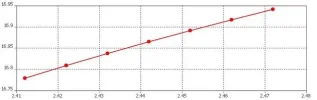
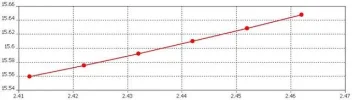
(first JPG--> Conical Horn+Cylinder / second JPG-->Conical Horn)
 

Attachments

  • 00690893.pdf
    00690893.pdf
    156.9 KB · Views: 79
  • cilindrolk1.webp
    cilindrolk1.webp
    14.2 KB · Views: 63
  • conear9.webp
    conear9.webp
    16.4 KB · Views: 49
slugworth said:
Primestar retailer dishes were channel master 1.0 meter
Mine came off a radio shack roof (for free)
Many old radio shack stores that sold primestar in the early 90's still
have them on their roofs.
The back says part # 3040642-02
mold # 1.0M -02
If that is the good one you are referring to.

I watched a motel and a Shell Petrol station get torn down, both had Andrew- Channel Master Dishes. It never occured to me to ask for them. There was also a 20 meter tower that fell across the power line, that was fun to watch. It started the building on fire. :-rofl2

My local Radio Shack has a 1.8 meter Channel Master but it has a Tx/Rx on it so I guess it's a POS terminal. I'll ask about it.
 
casser said:
I never worked in C-Band, but someday who knows:)

I did the calculations for a 35dBi Conical Horn, since Conical Horn antennas have 50% of efficiency..it will have your +-1.8meter diameter cone.


Frequency:4000Mhz
Gain: 35dBi
Diameter: 1.86meter
Lenght: 14.924meter :p
Flare Angle: 3.472º

This was calculated for a Waveguide with 45mm, i dont know what dimensions a C-Band LNB have...If you which, PM me to give the formulas (thanks to HDL_ANT creator for giving me the formulas) of optimum Conical Horn´s.

There are some articles to achieve better efficiency, i have attached an article about conical horn improvements and some test´s that i did for 2.4Ghz Conical Horn. The cylinder inside the Conical Horn give a boost of 1.3dBi, but i never tried in KU, since the bandwith of Conical Horn+Cylinder become very limited, i dont remember how much, but around 200/300Mhz. Also, i never tried in other conical Horn´s with different flare angle than 30º mentioned in the article.

Corrugated Conical Horn´s (LNB?), should have even better efficiency...but it looks very hard to build one..

Use this link to calculate antenna efficiency..
_http://www.satellite-calculations.com/Satellite/antennaefficiency.htm.

Sorry for the poor english;)

(first JPG--> Conical Horn+Cylinder / second JPG-->Conical Horn)
casser-

That is very interesting. Most LNBF for C Band have 65 mm throats so your calculations are very close :)

I would have to place the cone aperature across the fence into my neighbors yard. :cool:

This reminds me of the Ricola cold losenge advertisment on TV, with the guy in the Alps and the big horn about 10 meters long.

I made an aluminum parabola and then folded it flat to get the flat plate development. It appears to me that a flat plate made into a parabola will produce only a fraction of the performance of a true parabola because of the flat petals no matter how small. I'm giving up on the idea of a flat plate development. :eek:

I will try to form a template and then shape a (mesh) screen to a true parabola. :-DOH2

By the way, I think your English is excellent. :)

But then you must remember I'm American. LOL
 
ynotdu said:
dont forget It is not only Size that counts,The L N B/L N B C(low noise block converter,makes a hell of a diffrience,the lower the better,good luck&regards

Yes, ths is so true.

I'm using a Digiwave BSC 421 C Band LNBF that is 13 degrees noise factor and 65 dB gain conversion factor. This was the best I could find here in the states. :cool:
 
In this hobby we have good and bad days...this weekend was terrible)(-red

A 90cm version, worked has a 30cm version!! the antenna only have 1.4º -3dB..so my aim is really bad or the antenna is not working very well.
Better days will come (:


This is my dream:

_http://www.youtube.com/watch?v=-D7dlg0Zl2Q :-worship
(30 second video)


@Satcom
Your new antenna will have flat surface or parabolic/oval surface?
 
casser-

Interesting YouTube link-

No flat surfaces in the new dish. It will be as close to a true Parabola (oval) as I can make. 2 meters in diameter with a depth of 20 cm. No seems or overlaps. reinforced with fiberglass. :cool:

I will use the Polar Mount from the Fresnel dish and the same LNBF.
 
Satcom1 said:
casser-

Interesting YouTube link-

No flat surfaces in the new dish. It will be as close to a true Parabola (oval) as I can make. 2 meters in diameter with a depth of 20 cm. No seems or overlaps. reinforced with fiberglass. :cool:

I will use the Polar Mount from the Fresnel dish and the same LNBF.

Nothing is better than a traditional parabolic dish to build :)

I found two good links:

How to build a Parabolic dish--> _http://www.instructables.com/id/How-to-build-a-strikeheliostatstrike-paraboli/?comments=all

A lot of solar ovens/power systems, great info in Patent´s of different kind of oven´s/power systems, i think some of them is based in antennas--> _http://www.redrok.com/neat.htm
 
Back in the 80's there were articles about making a dish via spincasting.
A big turntable spinning @6rpm makes a natural parabola of a fluid surface.
People would make forms from concrete that way.
10rpm gave a different focal point.
You can still find info if you search the net for spincasting parabola.
 
I live in Puglia, South Italy, and I receive the Sky southern beam with a 1 metre dish. But I want to receive the northern beam, which contains the main 4 channels BBC1 BBC2 ITV and Ch 4 (These channels are missing off the southern beam) My calculations indicate that I need a 3 metre dish. Does anyone have any experience of this subject, and also does anyone know where I can obtain a 3 metre dish in Italy ? Richard (PugliaMan)
 
slugworth said:
Back in the 80's there were articles about making a dish via spincasting.
A big turntable spinning @6rpm makes a natural parabola of a fluid surface.
People would make forms from concrete that way.
10rpm gave a different focal point.
You can still find info if you search the net for spincasting parabola.


Yes, I found a link on spincasting a while back. A pan was placed on A phonograph turntable and liquid parafine was poured in. They claim a perfect parabola.:)

I thought of using a ceiling fan motor and a variable speed controller. :cool:
 
PugliaMan said:
I live in Puglia, South Italy, and I receive the Sky southern beam with a 1 metre dish. But I want to receive the northern beam, which contains the main 4 channels BBC1 BBC2 ITV and Ch 4 (These channels are missing off the southern beam) My calculations indicate that I need a 3 metre dish. Does anyone have any experience of this subject, and also does anyone know where I can obtain a 3 metre dish in Italy ? Richard (PugliaMan)


I have not looked up details on Lyngsat for these channels and your footprint. Does Lyngsat show you to be out of the main beam?

Having said that, My guess is that you would not need such a large dish.

Try a 13K - 65 dB lnbf like the BSC421. If Ku band Invacom.

Some testing here has been done with C Band on a Primestar dish 1 meter offset and some of the stronger signals can be received.
 
casser said:
Nothing is better than a traditional parabolic dish to build :)

I found two good links:

How to build a Parabolic dish--> _http://www.instructables.com/id/How-to-build-a-strikeheliostatstrike-paraboli/?comments=all

A lot of solar ovens/power systems, great info in Patent´s of different kind of oven´s/power systems, i think some of them is based in antennas--> _http://

That first link is very good.

I gave up on this idea, because each section is flat and not parabolic.

I have noticed that many of the old BUD's use flat mesh sections and this means a loss of signal for being flat and for using mesh. Paraclipse is a good example; 12' dish works like 6' steel dish.:-rofl2

Some of the newer BUD's use die formed mesh sections and are very close to true parabola when assembled. BUT they are still mesh not solid and lose a lot of the energy.:mad::eek:
 
Satcom1 said:
That first link is very good.

I gave up on this idea, because each section is flat and not parabolic.

I have noticed that many of the old BUD's use flat mesh sections and this means a loss of signal for being flat and for using mesh. Paraclipse is a good example; 12' dish works like 6' steel dish.:-rofl2

Being flat, doesnt mean that wont radiate..

I´m working on a project (for some weeks) based in the dishoven to get a antenna with three step construction:

-print, cut, mount:)

My main idea is to get 2meterX1meter aluminium plate (i cant remember the thickness) for 9€, which we can build a 1.8meter antenna with that only plate...not too bad for 9€.

The antenna will be enterally flat, no parabolic/oval complications..so far i got 76% efficiency on a 32cm diameter (i spoke about this version a couple of post´s before, for a 54dBW satellite..stable 75%, also it was able to receive some frequencies in Astra 2 south beams). Also i got 52cm version with 67% of efficiency and 60cm version with 55% efficiency (all the results for 11.75Ghz, they need some work to get at least 75%)..but i cant confirm that it will work on other frequencies beside KU and if it work in Circular Polarization..or even if the antennas will work as predicted.

No math involved here...i only test many combinations using variations of 10mm to get the maximum efficiency.

Bigger the dish...bigger is the time that i need to get final results:p
 
Testing the 52cm version, but:

-bad weather in Portugal, i had to test the antenna inside my room and the antenna is bigger than my window, so i´m loosing signal.
-really bad construction, to create a template i need o divide the antenna in several A4 paper´s and print them out...something went wrong and the antenna doesnt have the correct size/depth, because of this the FC is 15cm away from what i thought.
-many other bad mistakes.
-i only managed to test the antenna for 20minutes before it start raining

The antenna have almost the same results than the 32cm version for the 54dBW satellite..maybe later i will get a photos of the antenna.
 

Attachments

  • bscap0000.webp
    bscap0000.webp
    25.3 KB · Views: 111
my 2.4m mesh dish has arrived. But primefocus LNBs and feedhorns still not, expect to get them for 22-25 december.
 
@BombedOne

I suppose your 2.4m mesh dish is for C-Band..right?

when the antenna is mounted can you post some pictures of the antenna and the mesh holes?

Offtopic:

Since i "discover" that conical horn´s antenna can perform better than a Dish with the same gain/size, i started to ask myself why does it perform better? I searched a lot, but didint find any answer...always thought that the VSWR/Sidelobes/etc was the answer for that, but i got another theory (for Linear Polarization):

-If the gain and both Conical/dish antenna parameter´s are pretty the same, the problem is not in the antenna parameter..
-The difference between the Conical and Dish performance is that the Conical need´s 50% less diameter to get the same result´s of a Dish..what does it mean 50% of diameter? for each 6dB you double the diameter..so 50%=3dB. What usually mess up with 3dB? The polarization.

When using a Conical Horn the rotation of the LNB is inverse that we usually use in Reflector type antenna (Ex: Hispasat +33º with Dish; In Conical Horn need´s to be -33º ), When the "signal" hit the reflector, the polarization is rotated loosing 3dB...but when we use a conical Horn, since it´s a waveguide the signal wont "hit" any reflector not having any polarization loss, so it will perform 3dB better than a dish.
 
Polarisation is reversed when it is reflected, it's not rotated. The 'extra' 3db comes from the inherent lower noise figure associated with a conical horn.
 
Low Profile said:
Polarisation is reversed when it is reflected, it's not rotated. The 'extra' 3db comes from the inherent lower noise figure associated with a conical horn.

That was my first idea, conical horn have lower noise than the Dish...but i´ve build different kind of antennas (not all was conical) and the difference of 3dB was always accomplished using antennas that doesnt use reflector, maybe using reflector´s give higher noise to the antenna, i dont know...my RF knowledge is very low, this is only a hobby:)

So i have no gain/loss with the polarization in Conical Horn?
 
That's right, the gain remains the same, but the noise temperature is much lower - so effectively the gain to noise ratio is increased by about 3db.

As an aside, polarisation will also be reversed if a signal hits water, this sometimes leads people to believe that this is the reason why signals travel further over water, it's not, it's due to the dissipation factor.

To help understand the reversal of polarity, draw a sine wave against a vertical line, then draw the mirror image on the other side of the line. This is what happens when the polarity is reversed, it's nothing special, it just goes back up - where you might expect it to continue going down if it wasn't reflected.
 
@Low Profile

Thanks for the explanations, i want to learn more about these "world", but it´s hard to find simple explanations..

Just one more thing...Do you know why @Satcom1 fresnel antenna didint receive good quality of signal (you can find the post in page 5; #120)?
 
Back
Top