Astra 2E: On Hold At 43.5E

Status
Not open for further replies.
I didn't think it was arriving for another couple of days - obviously the tracking sites are a bit slower at catching up or they've raised it's orbit a bit to get it there faster? N2yo shows it at 20.9E, what's your rough guess at it's position now, closer to 20.0E (give or take +/- error)?
I think it's a little more west than the N2yo estimate, but I could be wrong, although the beacon signal drops down significantly at 21E +/- 0.2°.

Of course it's cutting it fine trying to judge the exact longitudinal position with equipment such as a positioner and dish motor. I can only go by looking at how the spectrum display changes with a motor pulse or two either way.
 
I've managed to take a pretty good shot of the sky tonight, unfortunately my targeting skills lack a bit.

 
On a second picture i could at least identify 2E:


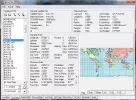
As a reference, the satellite positions from http://www.satellite-calculations.com using the urls:

http://www.satellite-calculations.c...050/25639/25071/23686/38741/36745/28542/32708

and

http://www.satellite-calculations.c...785/37810/26494/26853/31306/29055/33436/37950

There were a few minutes between the time i've took the photos and created the maps.


Bedtime. I have to work tomorrow :-(

Edit: oh, and a warning, don't open the urls if you don't have enough memory or cpu. ;)
 
That's a great picture! The uneven background "comes with the territory" when you
use wide-angle lenses to capture big parts of "the satellite belt". I've been looking
for a way to use some "clever" methods in photoshop/PS elements to compensate
for the background. Still searching but if I find something I will let you know.
Anyway, there is hope for pictures even if we happen to have clouds here in Sweden.
 
It was the first day without clouds since i don't know when. At least 4 weeks no chance to see the sky at night.
I had to wait till my neighbor turned of his lights. The sky was even a bit clearer earlier this evening. So that was a bit unfortunate. But since i now have all satellites in a foto with the tree i know better where to aim. So next time i'll try 19.2.

What i like most about this, if you look at the 28.2 position, you can identify all three satellites. quite amazing stuff.

I use photoshop as well. Taking out the colors, increase the whites, reduce the blacks, invert and play a bit with the exposure. Usually works well. But i can see most satellites already in the original foto, photoshop just helps a bit.

The brightness here comes from Hamburg. it's just about 20-25km away and the camera points directly in the direction of the harbour...
 
Yes,@solly,Astra 1H is at 20.640 E
 

Attachments

  • Astra 1H.webp
    Astra 1H.webp
    80.3 KB · Views: 67
I've managed to take a pretty good shot of the sky tonight, unfortunately my targeting skills lack a bit.
What is the exposure length?
 
hello guys ... I read with great interest, I just wanted to ask a curiosity but it is possible by focusing on the frequency 43.5 European 12493V see something second type tests etc but would like to know the symbol rate to be included??
 
tomorow astra 1h will be on 20 e
very close to astra 19.2e
 
hello guys ... I read with great interest, I just wanted to ask a curiosity but it is possible by focusing on the frequency 43.5 European 12493V see something second type tests etc but would like to know the symbol rate to be included??

It's a beacon carrier signal for tracking the satellite from the earth station who are monitoring its position and health. There's nothing transmitted other than telemetry and tracking control information - no DVB -S content (symbol rates etc.)
 
It's a beacon carrier signal for tracking the satellite from the earth station who are monitoring its position and health. There's nothing transmitted other than telemetry and tracking control information - no DVB -S content (symbol rates etc.)

Is it binary data ? Probably some sort of known protocol we could analyse ? telemetry data might be interesting for us maniacs :-)
 
I assume the data from this satellite is in L-Band, 940 -2150MHz, so you would need a receiver that can read the telemetry data - and that won't be an STB :rolleyes:
Maybe a HAM receiver in CW mode, with possibly a down-conversion to, say, 70MHz?

Or buy one of these... http://www.novella.co.uk/beacon_l_band.htm
 
2 minutes. I will try 4 minutes next time
Won't help a lot if there's light pollution. What lens is it? Here I'm using 105mm f/1.8, wide open. If I go any shorter or close the aperture I can't resolve any geosats. Too much light pollution here.
 
Won't help a lot if there's light pollution. What lens is it? Here I'm using 105mm f/1.8, wide open. If I go any shorter or close the aperture I can't resolve any geosats. Too much light pollution here.

It's this one:

http://imaging.nikon.com/lineup/lens/singlefocal/normal/af-s_50mmf_18g/index.htm

on a DX camera, so the effectively a 75mm lens. Best results so far i got with iso400 and f/3.5. Apertures less than 3.5 make the noise win.
2min exposure time seems to be better than one minute. therefore i want attempt to increase it even further.
 
on a DX camera, so the effectively a 75mm lens. Best results so far i got with iso400 and f/3.5. Apertures less than 3.5 make the noise win.
Got a 50mm f/1.8, f/1.4 and a f/1.2 here. None any good with the level of light pollution here. 105mm works though because it stretches 25% of the light over the same amount of sensor. Doesn't affect the brightness of the satellites though because they are a non-magnifiable source. 200mm f/2 would be nice (but at 3 grand I don't think I'll be getting one any time soon).
 
i'm using this page as a guide btw:

http://www.ehow.com/info_12224543_techniques-photographing-satellites.html

The trick seems to be to find the right iso setting for the brightness of the satellites and set the aperture accordingly. Unfortunately there hasn't been enough time to test everything because of the bad weather. In the end i guess it's similar to satellite setups. the right settings have to be found per camera and objective.

With 2min exposure time my camera uses another 2 minutes to denoise the picture, so i need 4 minutes per picture.
 
Status
Not open for further replies.
Back
Top