Astra 2F at 28E (at last!)

Status
Not open for further replies.

Analoguesat

Administrator
Staff member
My Satellite Setup
TM 5402HD
Sky+ UK.
My Location
Scottish Borders
The old testing at 43.5E thread has run its course as 2F is almost on station at 28E. So time for a new topic - signal reports from the new bird when she is powered up at 28E.

We already know signals will be strong over the UK, but all reports near & far are very welcome so we can see how far the various beams are getting out.
 
Testing Thread now closed.

Any interim chit-chat prior to powering up at 28E to the 2F General Chat Thread, please

http://www.satellites.co.uk/forums/topic/156568-astra-2f-general-chat/
 
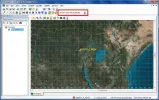
I stopped the clock on this image manually, but anyway take the timing with a pinch of salt because it involves an orbit changing maneuver which the program can't take into consideration. Roll on Tuesday!
 

Attachments

  • 2F-arrival-at-28E.webp
    2F-arrival-at-28E.webp
    74.5 KB · Views: 362
I stopped the clock on this image manually, but anyway take the timing with a pinch of salt because it involves an orbit changing maneuver which the program can't take into consideration. Roll on Tuesday!

Or use the following site:

_http://www.satellite-calculations.com/Satellite/Catalog/catalogID.php?38778

This gave the following:

Sat 15:53 UTC location 31.8169 moving 1.360 deg/day west

So doing the maths:

(31.8169 deg - 28.2 deg) / 1.360 deg/day = 2.66 days = 2 days 15 hours 50 min

Arrival time = Sat 15:53 + 2 days 15 hours 50 min = Tue 7:43 UTC

It will have to slow down when it gets close so it will arrive a bit later.

Terry
 
Sorry if this is off topic...

It will have to slow down when it gets close so it will arrive a bit later.
Actually that is wrong. Satellites that are further out are going slower. Currently 2F has a semi-major axis 107 km higher than geostationary so that means it is going slower. Geostationary is 3.0748km/sec, whereas 2F is currently 3.0697km/sec. Firing thrusters will cause it to fall to the lower orbit, possibly over 12 hours. That fall causes it to pick up speed so it is going at the correct speed when it arrives at geostationary altitude. Then it does another burn to circularize the orbit, rather than it oscillating between the 2 orbits. Anyway all this means it would arrive earlier, not later. But anyway all this is of no importance because the difference between the two orbital periods is only 6 minutes.
 
Sorry if this is off topic...
I don’t believe this is off topic.

This has got to be the most eagerly awaited new satellite in terms of reception reports from fringe areas ever.

So of course people want to know when it is going to arrive.That’s why I gave the following link so people can get an update on its progress:

_http://www.satellite-calculations.com/Satellite/Catalog/catalogID.php?38778

Actually that is wrong.

Thanks, I did know how it works, what I meant was the speed relative to the earth.

It was travelling at 1.360 deg/day west and that needs to reduce to zero deg/day when it gets to the final position.
But anyway all this is of no importance because the difference between the two orbital periods is only 6 minutes.
Thanks again, that is something I didn’t know.

I didn’t realise it got into position so fast.

Terry
 
Anyone got an up to date position for 2F as of this morning?
 
Once 2F is On Station, please use this Thread for


RECEPTION REPORTS ONLY


Off Topic Posts and discussion will be Moved either to the existing 2F General Chat Thread, and/or additional Threads can be created either by Contributors or Staff as necessary eg For Canary Islands chat etc.
 
today morning astra 2f arrive at home 28.2e
how we need keep eyes to see signal 2f next few days
 
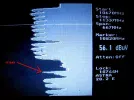
11164H very short bursts of narrow band. A couple of minutes on peak hold created the following picture. This was not there last night when I created the spectrum outline.

At first I thought this could be interference. Switched off all wireless devices. No neighbours in more than 100 metres. No trace on the same IF in HH or VL. And if I cover the feedhorn it disappears.
 

Attachments

  • 11164.webp
    11164.webp
    43.5 KB · Views: 245
according to lyngsat this could be feeds at 11160H. - which are only active occasionally
 
according to lyngsat this could be feeds at 11160H. - which are only active occasionally

Unlikely as Lyngsat are always behind and rely on others for their information
 
according to lyngsat this could be feeds at 11160H. - which are only active occasionally
Not a feed. This is short duration and very narrow band.
 
i can receive two signals at the moment, but with no lock. One narrow signal (11171 H) and MAYBE the first "data" signal (11184 V) or something else from 2F ???

who can confirm these two signals ?

28.2E-RFScan_2F_unknown.webp
 
11186V is an ACM-carrier and not new.
11171H (no lock) has been there also long time.
 
ok, it was not new for me, than forget my posting above
 
11186V is an ACM-carrier and not new.
11171H (no lock) has been there also long time.
This is not 11171H. Look at the spectrum outline in my image and you can see 11171H just below this signal.

The spectrum outline is saved in the meter memory. This carrier is outside the spectrum outline.
 
i can receive two signals at the moment, but with no lock. One narrow signal (11171 H) and MAYBE the first "data" signal (11184 V) or something else from 2F ???

who can confirm these two signals ?

View attachment 50547

Those frequencies are on 1N, show as "Occasional Feeds, data or inactive frequency" unlikely they are from 2F unless they has closed them on 1N and migrated them to 2F for testing
 
Status
Not open for further replies.
Back
Top