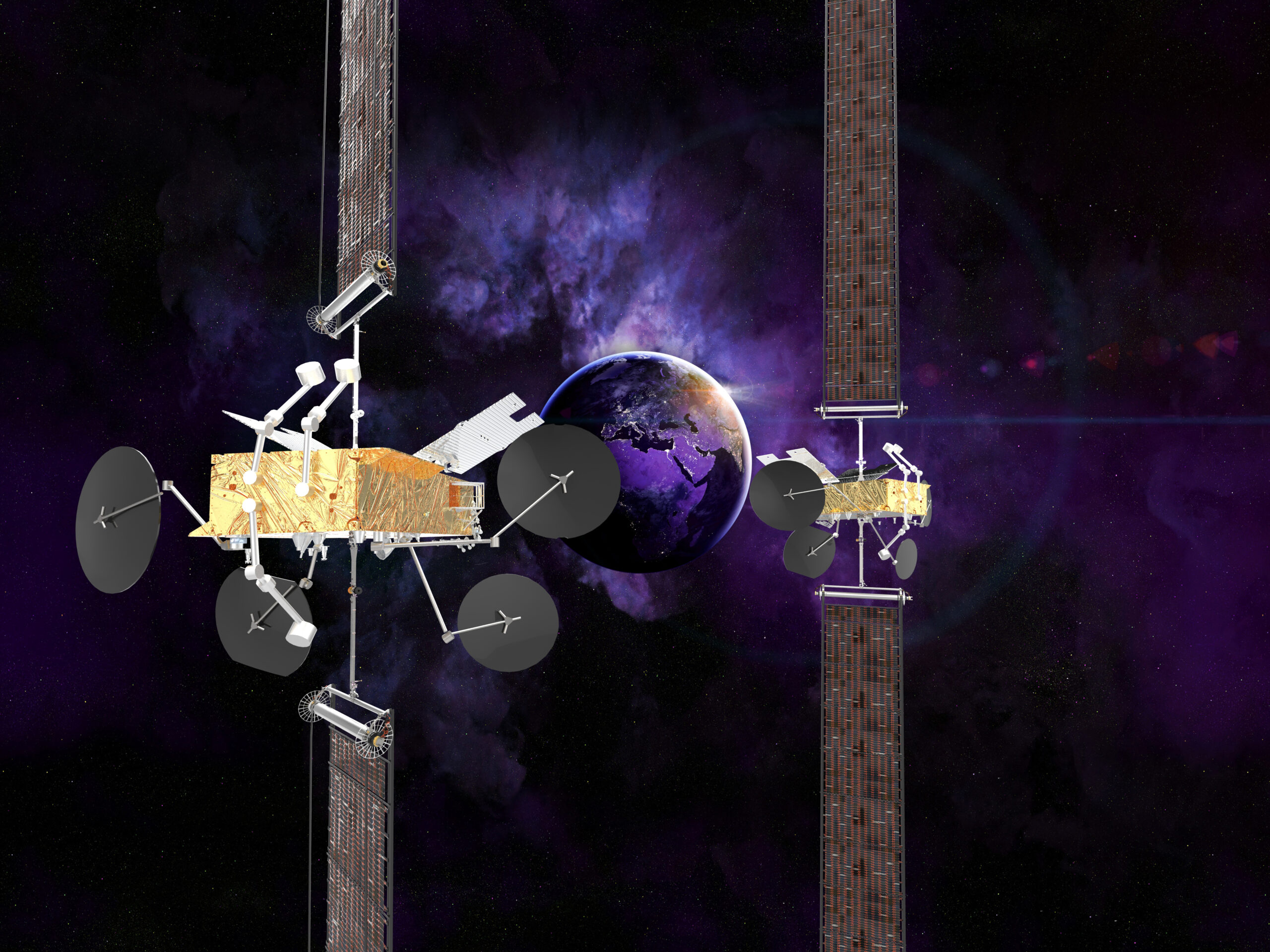
Astra1q and ses 25

sure, but that doesn't answer why all sats aren't in one place, like with 19.2 and most others. maybe there is some benefit to spreading them out more?
Because if they put all the birds at the SES alloted slot of 28.2E they would eventually lose the right to use 28.5E & theoretically a competitor could come in & claim it.
 
agree, they'll probably keep the best condition satellite going and junk the rest.

can these tug services work with any satellite, or are there technical limitations?
The tugs generally are designed to lock onto the orbital kick motors of the elderly birds they are taking over the station keeping of. So they lock onto the structures inside the rocket cone. Remember tugs duties are relatively low thrust events - its not like launch when the booster rockets are firing to reach orbit against the planet gravity well.
 
The Position of SES-26 has been revealed (57°E). Astra 1Q will be positioned at 19.2°E with "high throughput spot beams", as mentioned.
1773259278691.webp
Link to document
 
Last edited:
Current outlook of SES launches. IS-41 and IS-44 were cancelled.
1778675708453.webp
 
Yes.

The launch of the Astra 1Q satellite is being delayed primarily due to ongoing delays in the manufacturing of next-generation, software-defined satellite platforms, as well as changing market requirements on the part of the operator, SES. The postponement to 2028 stems from a combination of technical and strategic factors:
Technical hurdles with software-defined satellites: Unlike its classic sister model Astra 1P, Astra 1Q is based on the innovative Space INSPIRE platform from Thales Alenia Space. Complexity in orbit: This new generation of satellites is purely software-based. It allows for flexible reconfiguration of beam patterns (wide-beam and spot-beam) and capacities in space. Industry-wide platform delays: The development and flawless coordination of this highly complex, digital control software and the hardware components is taking significantly longer than planned.
Several satellite projects from major operators are currently affected by this (including, among others, competitors' OneSat platforms). Delivery schedules had to be adjusted from 2027 to 2028 in recent business reports.
As the market for traditional direct-to-home (DTH) satellite television in Europe stagnates and shifts toward hybrid IP and fiber solutions, SES is adjusting its fleet strategy. While other planned satellite projects in geostationary orbit (GEO) aimed solely at capacity expansion were cancelled entirely for 2026, the Astra 1Q project is proceeding—albeit on a stretched timeline—to align it perfectly with future data and broadband markets from 2028 onwards.


Back
Top