Calculating waveguide size

dreambox1959

Specialist Contributor
My Satellite Setup
Octagon SF8008 - technomate 7100
My Location
france
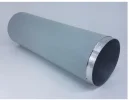
i am studying av-comm polarizer and "polopipe" (from brazil) (device for convert circular to linear)
i have found some calculation about wavelenght in pipe but i have two variant of the same equation :

LG = L / (racine (1 - ( L / (2.d))^ 2))
LG = L / (racine (1 - ( L / (1.6406.d))^ 2))

lg = wavelenght in pipe
L=wavelenght in air
d=pipe diameter

in the second way 1.64.06 matches with polopipe described on south american forums
first way is classical value found in mathmatical topics

does someone knows this subject and can gives me advice

polarizador-interior.webpPin Pipe 5.webppolopipe.webp

avcom7.webpavcom9.webp
 
I use this formula for cut-off Circular Waveguide Calculator
and the attached for lambda guide (from W2IMU Differential phase shifter for X band, Crawford Hill VHF group 1989)
 

Attachments

  • L-Guide.webp
    L-Guide.webp
    16 KB · Views: 40
in USA and soon in Europe 3.4ghz to 3.6Ghz will be used for internet radio and 5G
so Mr brian (Titanium) sale protected LNB ! wimax protected !!!
have we to consider only 3.7 to 4.2 ghz in europe ?
or 3.7 to 4.8 ghz ?
the middle frequency and pipe diameter is not the same !!!
 
...the middle frequency and pipe diameter is not the same !!!

The polo pipe and the pin pipe both work in the 3.7 to 4.8 GHz range. I have used a polo pipe with signals in the 4.5 to 4.8 GHz range from 40.5W and received pictures OK.

The signal levels in the 4.5 to 4.8 GHz range can probably be improved by using a polo pipe or pin pipe with custom internal diameter for that higher frequency range?
 
in USA and soon in Europe 3.4ghz to 3.6Ghz will be used for internet radio and 5G
so Mr brian (Titanium) sale protected LNB ! wimax protected !!!
have we to consider only 3.7 to 4.2 ghz in europe ?
or 3.7 to 4.8 ghz ?
the middle frequency and pipe diameter is not the same !!!
Coverage of <3.7 depends on your need for Russian satellites, mainly.
The filter in the Tit is OK but if you really want to get rid of Wimax, you need a waveguide or other good quality filter.

As long as the pipe is above the lower cut off and below higher multi-modes, the diameter doesn't matter too much. The problem is with the depolariser. If it has a wide phase/frequency bandwidth you're OK. Some of the best ones are like this one A prodelin / gd satcom / tripoint global c band offset feed / omt - SatsUK or with scaled lengths to the pins in the pin pipe type.
It's hard to get a usable, frequency independent, phase shift over more than about 10-15% of centre frequency. You can adjust the feed skew to recover some circularity as you move away from the precise +/-45 deg frequency (see @John posts)

<Edit>I didn't see @moonbase post till now - yes, changing the dimensions of the pipe squeeze will improve it if you want to change the frequency a lot.

If your depolariser is a bit off you'll get elliptical polarisation which will still work OK as long as you don't need much X polar rejection
 
Last edited:
...The filter in the Tit is OK but if you really want to get rid of Wimax, you need a waveguide or other good quality filter.

...Some of the best ones are like this one A prodelin / gd satcom / tripoint global c band offset feed / omt - SatsUK


There are two Tit variants re WiMax. The C1-PLL has a soft cut off filter below 3700 MHz and a harder cut off filter below 3600 MHz. The C2-PLL has a hard cut off filter below 3700 MHz. Pick your Tit...

I have been using a WiMax Tit (C1-PLL) recently on 51.5 East and 53.0 East in the 3600 MHz range and received signals OK. They were marginally down compared to a non WiMax Tit but not drastically. There is a table comparing a WiMax Tit (P1-PLL) with a non WiMax Tit (P1W-PLL) in post 14 of the topic linked to below.


That Prodelin square box polariser is the Rib Tickler with the ribbed internal surfaces. The one offered for sale on the forum recently was a real bargain and a top quality piece of equipment. If "John" pops along he might be able to provide some info on how the Rib Tickler compares to an AV-COMM Polo Pipe? If I remember correctly, the Rib Tickler gave improved performance?
 
There are two Tit variants re WiMax. The C1-PLL has a soft cut off filter below 3700 MHz and a harder cut off filter below 3600 MHz. The C2-PLL has a hard cut off filter below 3700 MHz. Pick your Tit...

I have been using a WiMax Tit (C1-PLL) recently on 51.5 East and 53.0 East in the 3600 MHz range and received signals OK. They were marginally down compared to a non WiMax Tit but not drastically. There is a table comparing a WiMax Tit (P1-PLL) with a non WiMax Tit (P1W-PLL) in post 14 of the topic linked to below.


That Prodelin square box polariser is the Rib Tickler with the ribbed internal surfaces. The one offered for sale on the forum recently was a real bargain and a top quality piece of equipment. If "John" pops along he might be able to provide some info on how the Rib Tickler compares to an AV-COMM Polo Pipe? If I remember correctly, the Rib Tickler gave improved performance?


Hi, i'm John and iv'e just popped

Yep, i have the Prodelin box poloriser and i did find it a noticeable performance increase compared to the other pipe types mentioned which i have used prior to the Prod. I have modded mine to enable the lnb flange part of the poloriser to rotate 360° around the square internally ribbed barrel section via a servo motor that gave a pretty good RF seal between the two sections and it still out-performed the others .... the most noticable area of improvement was up the top end of the band - 4.5 - 4.8 GHz where there was about 2dB increase in performance - across the normal 3.6 - 4.2 GHz part there was about 1dB or more increase. Highly recommended bit of kit.
 
John

Did you get the longer depolariser up and running ?
 
John

Did you get the longer pipe up and running ?


No not yet - it's in the 'Jobs to Do' list - - i got side tracked with making that mobile test rig thing
 
Back
Top