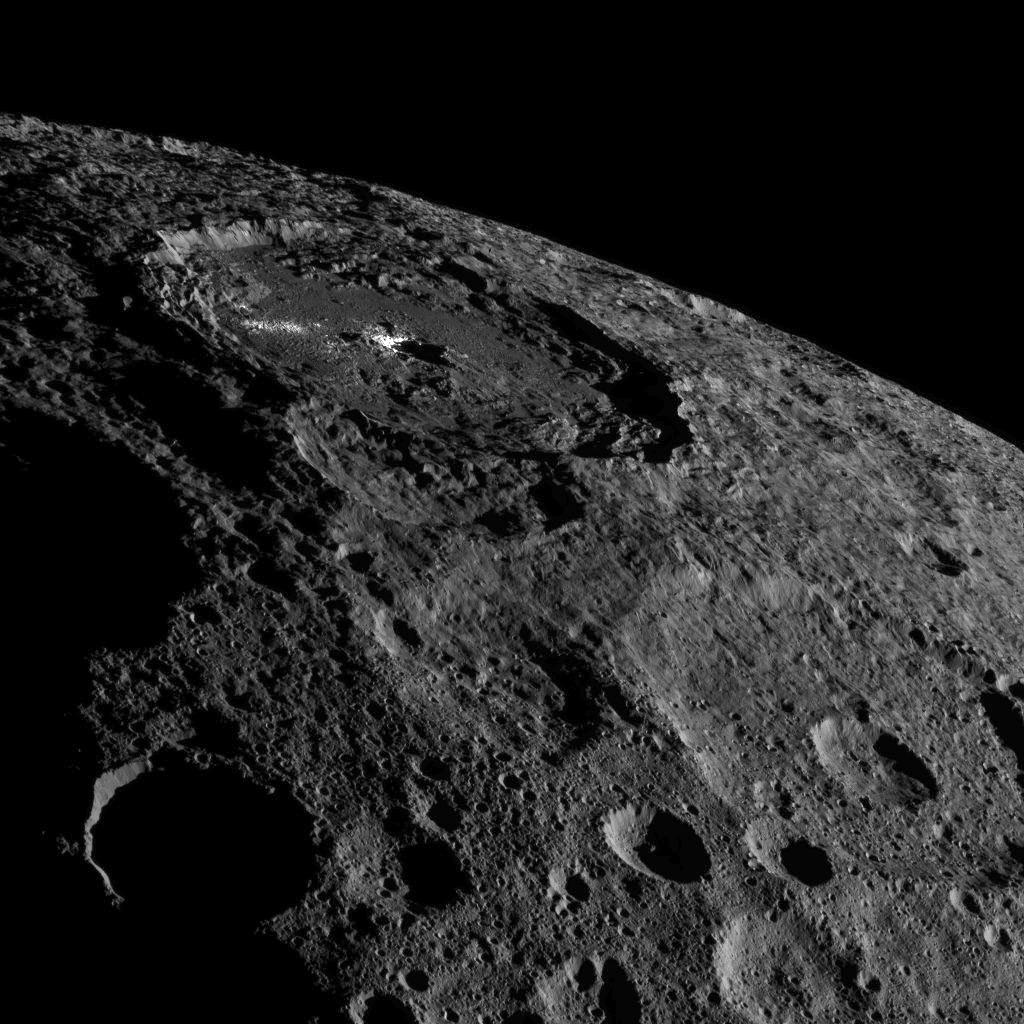
Spooky, New Horizons did the same earlier this week.
Just after Dawn fired up its ion engines to begin spiraling down toward its third science orbit of Ceres on June 30, the spacecraft's protective software detected a problem of some sort, NASA officials said. As a result, Dawn quickly shut off its engines and went into safe mode.
Fighting back
Dawn's arrival in a stable orbit around Ceres was delayed after, close to reaching Ceres, it was hit by a cosmic ray, making it take another, longer route around Ceres in back, instead of a direct spiral.
1.5m IRTE PF, Invacom SNF-031, TBS6983,
Various L, S, C, X & Ka bits. 1.2m S/X/Ku/Ka Prodelin on Az-El (being refurbished), 1.8m Precision PF with Bullseye Ku LNB or various C & X bits
1.5m IRTE PF, Invacom SNF-031, TBS6983,
Various L, S, C, X & Ka bits. 1.2m S/X/Ku/Ka Prodelin on Az-El (being refurbished), 1.8m Precision PF with Bullseye Ku LNB or various C & X bits
1.5m IRTE PF, Invacom SNF-031, TBS6983,
Various L, S, C, X & Ka bits. 1.2m S/X/Ku/Ka Prodelin on Az-El (being refurbished), 1.8m Precision PF with Bullseye Ku LNB or various C & X bits
Ceres' lonely mountain Ahuna Mons is seen in this simulated perspective view from NASA's Dawn spacecraft. The elevation has been exaggerated by a factor of two.
This site uses cookies to help personalise content, tailor your experience and to keep you logged in if you register.
By continuing to use this site, you are consenting to our use of cookies.




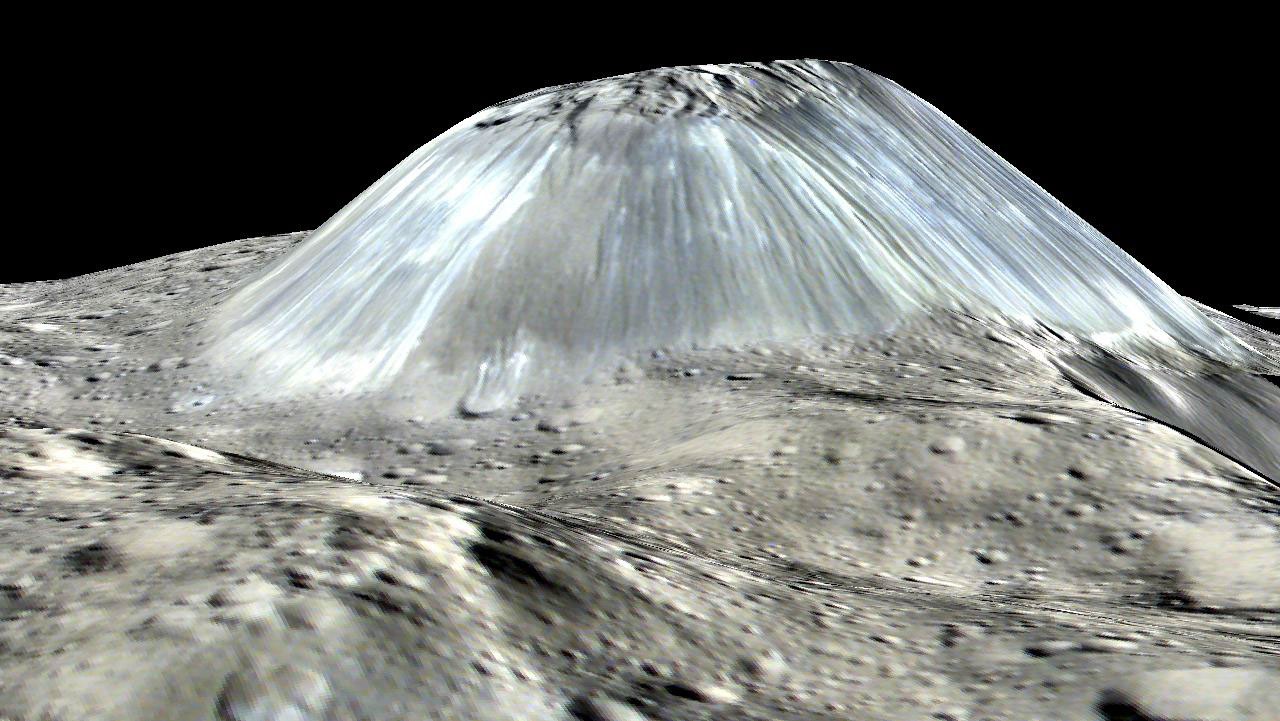
 photojournal.jpl.nasa.gov