Inclined Birds ..

Ive been pondering a "safe" way of modding my existing setup to pick up inclined birds without weakening the strength of the existing dish support. Currently Ive got a Jaeger 99 motor moving a TD110 dish. Ive seen a second motor that moved the entire jaeger99 motor up and down, and hence the dish too.

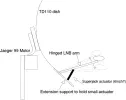
My thought was... instead of moving the entire dish and potentially creating a weak point at the inclined motor point... why cant I move just the LNB arm, hence moving the LNB up and down a little? Ive attached a diagram so hopefully my idea makes sense. What are other peoples thoughts on this?
View attachment 34453
 

Attachments

  • Inclined.webp
    Inclined.webp
    13.2 KB · Views: 57
moojuice said:
Ive seen a second motor that moved the entire jaeger99 motor up and down, and hence the dish too.

My thought was... instead of moving the entire dish and potentially creating a weak point at the inclined motor point... why cant I move just the LNB arm
Both are a compromise. Moving the LNB arm moves the LNB away from the focal point, and moving the motor mucks up tracking the arc and adds skew, rather than elevation at the ends of the arc. The only way to do it properly is to add declination control; that way, once set, skew and declination maintain their values right across the arc.
 
I suppose one good way is to just try it. With any luck the focal point wont change too drastically to affect the signal strength. Alternatively, perhaps a small stepper motor and a rack-pinion drive at the end of the LNB arm to physically move the LNB up and down might be a possible solution? On a week off from work soon I might fabricate a replacement LNB arm and have a play..
 
moojuice said:
a small stepper motor and a rack-pinion drive at the end of the LNB arm to physically move the LNB up and down
Sounds complicated. Wouldn't it be easier to just move the dish up and down?
 
The only way I can see of retrofitting a motor to move the whole dish up and down is to attach the motor to the rear threaded bolt support of the Jaeger 99 motor. Now having seen these pictures:

_ttp://www.satellites.co.uk/forums/attachments/forum95/29152d1270714282-07042010-006-jpg.att

_ttp://www.satellites.co.uk/forums/attachments/forum95/29153d1270714282-07042010-002-jpg.att

_ttp://www.satellites.co.uk/forums/attachments/forum95/29154d1270714282-07042010-001-jpg.att

I really want to avoid having that happen to my 99!

*Edit - I never seem to make images appear properly on here, despite them already being hosted here!*
 
when is the best time to get a lock on this satellite at 2e as I can never seem to get a signal to get the position stored.

the tracking site has the sat over the uk but I cant seem to get a signal from it at the moment.
 
Give it an hour or so atm - shes 2 degrees up atm wod, but coming down again:

-http://www.n2yo.com/?s=22653

Look for longitude near zero
 
Astra 1C tracking:

-http://www.n2yo.com/?s=22653

Astra 1D tracking:

-http://www.n2yo.com/?s=23331
 
Analoguesat said:
Give it an hour or so atm - shes 2 degrees up atm wod, but coming down again:

-http://www.n2yo.com/?s=22653

Look for longitude near zero

thats where i was going wrong, i was watching the blue line to see when it was over the uk.


anyone modded their dishes recently to allow for up/down movement ?
 
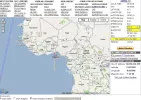
Heres a quick heads up on interpreting the tracking charts on the n2yo site. The picture happens to be Astra 1C but its the same for all the inclined orbit broadcast sats.

The blue line over on the left here is the sunrise / sunset line.

The elderly Astra is the icon in the middle of the screen and the yellow line is a representation of the up down wobble. (Basically an elongated figure 8 with the "waist" of the 8 being on the main orbital plane)

The arrow near the icon is useful - it shows which way the satellite is moving - in this particular case its moving south back towards the main orbital plane and so dishes without inclined tracking have a chance to receive the signals in the next couple of hours.

Over on the right the most useful figures are the latitude and longitude information - they show where the bird actually is.

Please note whilst the tracking sites are useful for geostationary satellites OR satellites where the orbital parameters dont change they do tend to fall down when a broadcast satellite is being moved to a new slot - it can take a few weeks for the ephemeris data about the orbits to be updated.

Some of the old long retired birds have interesting orbital wiggles - not only are they doing their inclined figure 8 but drifting in graveyard orbit too :D
 

Attachments

  • Image1.webp
    Image1.webp
    112.1 KB · Views: 52
Analoguesat said:
Some of the old long retired birds have interesting orbital wiggles - not only are they doing their inclined figure 8 but drifting in graveyard orbit too :D

Heres a wiggly one - Eutelsat ECS1 ( 1-F1) launched waaaay back in 1983 :D

-http://www.n2yo.com/?s=14128
 
Analoguesat said:
Please note whilst the tracking sites are useful for geostationary satellites OR satellites where the orbital parameters dont change they do tend to fall down when a broadcast satellite is being moved to a new slot
Where is Astra 1D off to?
 
wod said:
anyone modded their dishes recently to allow for up/down movement ?
I'm in the middle of doing one at the minute.
 
Analoguesat said:
Nowhere as far as I know
Latest TLEs from Norad say it's moving east and Lyngsat and that tracking site agree. Maybe it's just done a small correction and that's mucked up the tracking data.
 
Well I've just finished modifying my Jaeger 99 mount with a 12" superjack motor for Inclined operation. I decided it wasnt worth messing about moving the LNB arm and decided 2 x 36v motors were best.

Lets just say its a bit fiddly to do, but thank f**k for unistrut! I can see why electricians love the stuff.

Pics to be posted tomorrow, after Ive spent a few hours realigning everything and replacing the LNB on the TD110 with a Inverto Black Ultra Quad. Also need to set up some sensible limits before I bend the dish around a scaffold pole!
 
Times when Astra 1C crosses the geo-belt at 0 degrees as generated by STK are:
(Epoch, meaning when the last the TLE was generated, is 21 April)

Satellite-ASTRA_1C


Time of Ascen Node (UTCG)
-------------------------
21 Apr 2011 14:32:01.193
22 Apr 2011 14:28:01.788
23 Apr 2011 14:24:04.149
24 Apr 2011 14:20:07.240
25 Apr 2011 14:16:09.996
26 Apr 2011 14:12:11.516
27 Apr 2011 14:08:11.187
28 Apr 2011 14:04:08.723
29 Apr 2011 14:00:04.156

Times are in GMT so add an hour for British Summer Time or however many hours you are ahead or behind GMT.
Note, these are the times when the satellite is moving upwards past the geo belt (so called the Ascending Node). You can also see that the crossing time is roughly 23 hours and 56 minutes until the next crossing which is the duration of a sidereal day - so descending node is approx just 11 hours and 58 minutes after these times, around half past three in the morning UK time.

I'm just in the middle of restoring a Jaeger 1224, giving it a coat of zinc paint, followed by Hammerite. I see it has pre drilled holes for the Elevation brackets, so I'm going to see if I can manufacture them out of some thick steel. Will be interested to see your pics moojuice..
 
Back
Top