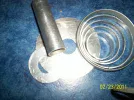
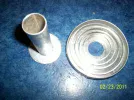
Ku band depolarisation plate

mouse3

Regular Member
My Satellite Setup
1.2 offset,1.2 simetric ,0.9 offset.
My Location
Transilvania
Hi,
I know the facts C Band have a lots of depolarisation plate make by the C band enthusiast in all Europe and the world and perform well for fringe where each dB counts.
About Ku Band i want to know what it s the best materials to make Ku band depolarisation plate.
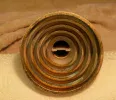
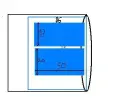
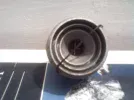
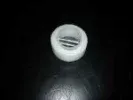
It s possible to be porcelain/ceramics ? I have one old porcelain resistor for high voltage and with a little work at home it s possible to become a Ku band depolarisation plate.Porcelain thickness plate it s 1 mm.

What do you know about Ku band depolarisation plate?
Thanks.

 

Attachments

  • 04.webp
    04.webp
    351.1 KB · Views: 82
Hi Mouse ..
Guess your after Bonum1 ?

I make my own depolarising plates for C band out of Polyethylene cutting boards as used in the kitchen..
Those nice translucent slippy to the touch ...chopping boards you can buy from any supermarket ..
I don't know how well it would perform at ku ...but I _can_ say its the best dielectric plate material I've found so far...
Easy to cut with a small hand saw ...and easy to grind down to the required thickness by rubbing on a flat 'graded' sandpaper..
best of luck m8
VS
 
hi - mouse3

Eutelsat W7 Russian beam at 36 east has circular k/u transponders too -- maybe you are trying for these also-
i,v tried for these - but no result - i,m way outside the footprint here -- but i had to try:)

when i bought my channel master k/u feedhorn many years ago -- it was supplied with a depolarising plate - it is made of a teflon / plastic
material like Vipersan has described and is around 2mm thick ---
the ceramic material you have may be ok also - it would be worth a try

regards - nelson.b.
 

Attachments

  • 1.webp
    1.webp
    33.8 KB · Views: 68
  • 2.webp
    2.webp
    42.3 KB · Views: 62
How does a depolarising plate work if it's made of plastic? Surely it's invisible to the microwaves?

Did I do something similar when I stuck a bob of blue-tack down an old BSB dish LNB to pick up the opposite polarity?
 
timo_w2s said:
How does a depolarising plate work if it's made of plastic? Surely it's invisible to the microwaves?

Did I do something similar when I stuck a bob of blue-tack down an old BSB dish LNB to pick up the opposite polarity?

non-microwave safe plastic.
the kind of plastic that gets hot and melts in a microwave oven
 
Thank You Guys for replay.
A have a lots of pictures with C band depolarisation plate but nothing for Ku Band.It s time for experiments i think.From my country doktorofsat it s good making a lots of depolarisation plate for C band.
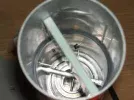
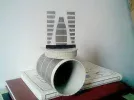
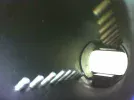
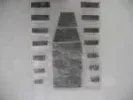
From what i know from other guys the plastic botle its good for depolarisation.Watch the photo below.The metal it s aluminium from chocolate box and perform well.
 

Attachments

  • DE 1.webp
    DE 1.webp
    30 KB · Views: 78
  • DE 2.webp
    DE 2.webp
    10.3 KB · Views: 74
  • DE 3.webp
    DE 3.webp
    4.8 KB · Views: 54
  • DE 4.webp
    DE 4.webp
    31.4 KB · Views: 62
  • DE 5.webp
    DE 5.webp
    13.2 KB · Views: 59
  • DE 6.webp
    DE 6.webp
    23.4 KB · Views: 61
  • DE 7.webp
    DE 7.webp
    14.6 KB · Views: 47
  • DE 8.webp
    DE 8.webp
    1.6 KB · Views: 56
  • DE 9.webp
    DE 9.webp
    3 KB · Views: 52
  • DE 10.webp
    DE 10.webp
    3.7 KB · Views: 58
  • DE 11.webp
    DE 11.webp
    1.2 KB · Views: 58
  • DE 12.webp
    DE 12.webp
    21.1 KB · Views: 48
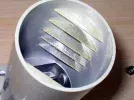
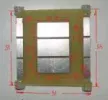
With pllastic plate like this at photo(abb. 1mm thickness), all 36E W4 Russian beam transponders are O.K. abb.75% Quality(0% without plate) here in Varna(Bulgaria), 1.2m parabola
Plastina36E 004 (675 x 506).jpg.webp
 

Attachments

  • Plastina.webp
    Plastina.webp
    211.4 KB · Views: 65
  • Plastina36E-2 001 (675 x 506).jpg.webp
    Plastina36E-2 001 (675 x 506).jpg.webp
    42.9 KB · Views: 63
slugworth said:
non-microwave safe plastic.
the kind of plastic that gets hot and melts in a microwave oven

Ah OK, thanks.
 
mouse3 said:
Thank You Guys for replay.
A have a lots of pictures with C band depolarisation plate but nothing for Ku Band.

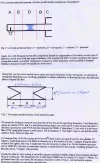
You're not looking hard enough. The problem with Ku band depolarisation, is not only the reduced size over C band equipment, but the extended frequency range. Over the 2+ GHz band the characteristics of of a one size depolariser change, not only impedance matching (and therefore the efficiency), but the need to allow an equal linear response from both circular polarities. Manufacturers opt out of slabs of dielectric materials, preferring full mechanical waveguide solutions to reduce the losses to an acceptable level.

Anyhow, you could start looking at Chang equations (or even eigenmodes) and go from there.

_http://astro.berkeley.edu/~greg/008-84mtt-abv.pdf
 
mouse3 said:
but nothing for Ku Band.It s time for experiments i think.
For Ku band I have used milk bottle plastic,coffee can tops.Some people chop up old credit cards and use them.The biggest pain is getting the proper thickness,sometimes you need 2 or 3 strips of plastic for a snug fit.
Some ku band lnb's don't have slots for the plate,so you have to guess at the correct spot in the throat and trim wisely for the correct fit.
 
Vipersan said:
Hi Mouse ..
Guess your after Bonum1 ?

I make my own depolarising plates ..
best of luck m8
VS

Thanks for inputs Mr.Vipersan it s useful to know what materials are useful for depolarisation plates.
Bonum1 it s one option.My visibility in my location in the theory covered from 45W to 100.5 E,but the extreme are fringe and are hard to catch using 1m dish with town council legislation.Rural area are the best place to be,high on the hills top,perform better.
On the field my coverage area start from 37,5w to 90E.I need a new location and one large dish.
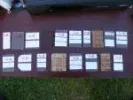
Thanks for replay Mr.nelson_b,popovp and slugworth i have that ceramic plates and i make one test.
Mr. Channel Hopper i know about waveguide calculation from the internet,i found lots of them,but my advance mathematical skills missing so, it s hard to manage that calculation,im only one simple enthusiast,nothing more.
I think i must be born again to manage that advance mathematical skills.

mouse.
 

Attachments

  • DE 15.webp
    DE 15.webp
    10.4 KB · Views: 67
  • DE 14.webp
    DE 14.webp
    296.4 KB · Views: 56
  • DE 13.webp
    DE 13.webp
    304.3 KB · Views: 57
I have one question more for you,Guys.It s from linear polarisation,but it s the best opportunity to ask.
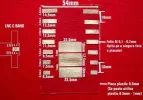
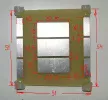
I found samthing intresting and i want your s opinion.This small pcb antenna work from 3 Ghz to 25GHz.It s possible to connect that small antena to the LNC probes,one old analogic LNC i don t know if the pcb work inside digital LNC probes,the small pcb have enough space to enter on the LNC throat.It s possible to perform better?
Maibe it s one stupid question,but the pcb work on this range of frecvency.
What do you think about this,maybe somebody know samthing useful.
Thanks,
mouse.
 

Attachments

  • 3GHz-25GHz.webp
    3GHz-25GHz.webp
    12.1 KB · Views: 57
mouse3 said:
Mr. Channel Hopper i know about waveguide calculation from the internet,i found lots of them,but my advance mathematical skills missing so, it s hard to manage that calculation,im only one simple enthusiast,nothing more.
I think i must be born again to manage that advance mathematical skills.

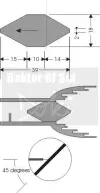
You could of course just copy the design that is shown within the link, adapted to suit your particular feed-horn, and go from there.
 
For material check out paxolin. Comes in various size sheets and thicknesses.
_http://en.wikipedia.org/wiki/Phenol_formaldehyde_resin
 
Thanks for help,Guys. :)
Each imputs it s useful for me.
 
Back
Top