Astra 2E: On Hold At 43.5E

Status
Not open for further replies.
It's the most likely scenario right now. 1H cannot be used as a DTH satellite anymore so they can only use it to offer SNG capacity. There are lots of SNG feeds via 23.5E... and free bandwidth.
3B is certainly pretty full carrying both DTH services and feeds, would take a bit of pressure off 3B if 1H was co-located. We'll be able to rule out 28.2E in about four days, now we know it's still moving west reckon why SES wouldn't want to have two craft moving in a raised orbit simultaneously purely for safety reasons.
 
Last edited:
The current TLE for Astra 1H is - Epoch:18.12.2013 14:24:46 UTC, almost 2 days ago.
 
The current data from SES is a bit younger:

Code:
SUBJECT: ELEVEN PARAMETER EPHEMERIS FOR Astra-1H/ 52.30 DEG. E

YEAR  MONTH  DAY  HOUR  MINUTE  SECOND
2013  12    19  07    30      00

THE EPHEMERIS VALUES ARE:

LM0            LM1              LM2
DEG. E          DEG/DAY          DEG/DAY/DAY
30.5007      -0.5605            0.000802

It is still moving.
 
The current data from SES is a bit younger:

Code:
SUBJECT: ELEVEN PARAMETER EPHEMERIS FOR Astra-1H/ 52.30 DEG. E

YEAR  MONTH  DAY  HOUR  MINUTE  SECOND
2013  12    19  07    30      00

THE EPHEMERIS VALUES ARE:

LM0            LM1              LM2
DEG. E          DEG/DAY          DEG/DAY/DAY
30.5007      -0.5605            0.000802

It is still moving.

Is the SES data "real" tracking data or derived from the TLE?
 
Depends on what you consider "real"!
TLE's of objects at geo altitude, are mostly based on visual observations, with rather large time intervals between these observations.
Because of this, a TLE is rather unreliable after a manoevre has taken place.
It takes a few observations afterwards before the new orbit becomes clear and the TLE is reliable again.
The Ephemeris and center-of-box data is based on the intended position, for satellite users, rather than on feedback (observations).

Nevertheless, satellite operators have interest in TLE's of ALL objects (especially debris) to avoid collisions.
Other healthy satellites that are under position control are the least of their concern!

Edit: by the way, since recently Celestrak also provides TLE's based on the SES ephemeris, rather than the usual TLE's based on US SSN data.
http://www.celestrak.com/NORAD/elements/supplemental/
 
Last edited:
Maybe SES will lease Astra 2E to Turksat as they do not need it atm.:)
 
astra 1h now 29.8 east it pass turksat
will be soon pass astra 2 slot
 
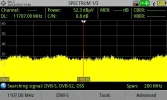
Hauling back to the titular post, confirmation (if indeed necessary), of the beacon frequency of 2E at 43.5E, courtesy of my Promax speccy - give or take a few pulses of my dish motor.
 

Attachments

  • Astra_2E_Beacon_43.5E.webp
    Astra_2E_Beacon_43.5E.webp
    35.3 KB · Views: 99
Well I guess maybe next week sometime we will have a clearer idea of where 1H is to be located, then again maybe not....

Rather suspect 2E will not move until the New Year, if as quoted by SES the spot beam re-location will start during early February. Wonder if they will move 2A transponders to 2E (on Pan European beam) and keep 1N on station until 2G arrives. There was no mention of moving 1N Pan European transponders.

2A was originally slated to be relocated to 23.5E, but that information seems to have disappeared on the SES website.
 
Well if 2A is, as has been suggested, rapidly getting to the end of its life, maybe 1H will indeed take over what were to be 2A's duties at 23.5E and the delay in getting 2E to 28E is to allow the more urgent moves to take place first?

Then 2E to 28E and 2A to graveyard?
 
SES wouldn't want to have two craft moving in a raised orbit simultaneously purely for safety reasons.
Are you serious? That's like saying London Underground wouldn't have two trains moving in the same direction along the same track. If you think about it all the satellites in geostationary orbit are all traveling simultaneously along the same orbital path, and far closer together than this. At that altitude 1º = 735km, meaning these satellites have literally thousands of kilometers between them, whereas geosats in a cluster are constantly changing direction in relation to each other and never much more than 0.1º apart and normally closer.
 
Last edited:
Clearly moving 2E is not a priority as it's not needed on station till February, hence why I suspect it will start to move in the New year or at the earliest after Xmas. If 1H is going to 23.5 then it's not going to arrive until just before New Year.
 
That's like saying London Underground wouldn't have two trains moving in the same direction along the same track. If you think about it all the satellites in geostationary orbit are all traveling simultaneously along the same orbital path, and far closer together than this. At that altitude 1º = 735km, meaning these satellites have literally thousands of kilometers between them, whereas geosats in a cluster are constantly changing direction in relation to each other and never much more than 0.1º apart and normally closer.
I take your point, was thinking though possibly during the orbit raising/lowering manoeuvres if another craft was traveling at the same raised orbit but then again it should have reduced in height somewhat whilst appearing, from earth, to slow down.

Seems odd after such big launch delays that SES have now delayed 2E's final move and commissioning to get her in operation at 28.2E. If they don't need her there until early Feb they could start moving her soon very slowly and save a lot of housekeeping fuel.
 
astra 2e start move from febuary will be start operation end of febuary or march 2014
i think will be start mid next 3 week
 
Is the SES data "real" tracking data or derived from the TLE?

I expect that SES knows in detail where its satellites are. Since they offer this information as a service for installers i strongly believe that this data is coming directly from their systems.
 
Depends on what you consider "real"!
TLE's of objects at geo altitude, are mostly based on visual observations, with rather large time intervals between these observations.
Because of this, a TLE is rather unreliable after a manoevre has taken place.
It takes a few observations afterwards before the new orbit becomes clear and the TLE is reliable again.
The Ephemeris and center-of-box data is based on the intended position, for satellite users, rather than on feedback (observations).

Nevertheless, satellite operators have interest in TLE's of ALL objects (especially debris) to avoid collisions.
Other healthy satellites that are under position control are the least of their concern!

Edit: by the way, since recently Celestrak also provides TLE's based on the SES ephemeris, rather than the usual TLE's based on US SSN data.
http://www.celestrak.com/NORAD/elements/supplemental/

Ok thanks for that,

So on that basis the SES data would be more real albeit approx 28 hours old, but that should mean that 1 - 1.5 day after it arrives at it's destination the SES data would confirm it.

n2yo seems to be using the Space Track TLE rather than the SES supplemental TLE, which could well take longer to confirm arrival at the destination, and will show overshoot initially, which is what we noticed with 2F.

So late Tuesday we will have an idea if 28.2 is it's destination or not, as its should stop/pass 28.2E on Monday morning
 
Last edited:
Ok thanks for that,

So on that basis the SES data would be more real albeit approx 28 hours old, but that should mean that 1 - 1.5 day after it arrives at it's destination the SES data would confirm it.

n2yo seems to be using the Space Track TLE rather than the SES supplemental TLE, which could well take longer to confirm arrival at the destination, and will show overshoot initially, which is what we noticed with 2F.

So late Tuesday we will have an idea if 28.2 is it's destination or not, as its should stop/pass 28.2E on Monday morning

Maybe sooner if it's a clear Monday night in Sweden..... ;)
 
Have made up a collection of quotes from the posts here, so anybody late in joining the discussion does not have to read all posts to get the most important scientific content.

appears to be could lead to I don't know the details presumably they may/or may not If this is the case I wonder if very much doubt this will give you an idea maybe during this week

I guess could it would have been I must have got it wrong maybe will be it would seem logical Lets hope One assumes one might consider probably It might be that may include My guess is Yes but may have I believe but I don't know seems more likely we assume I think


Let's hope may in the next few days Maybe, maybe not let's see probably As is seems maybe I think if it still shows probably could be there somewhere but hopefully Probably or it's going somewhere else I still find it hard to believe Personally, I think I strongly suspect I also think if and where to supposed next possible It could That would be

does that mean anything my next guess would be let see if most likely scenario Well I guess maybe then again maybe not Rather suspect if as quoted Wonder if Well if maybe Are you serious? why I suspect was thinking it should have Seems odd they could start i think I expect i strongly believe that should mean seems to be is it's destination or not

Merry xmas :)
 
Maybe sooner if it's a clear Monday night in Sweden..... ;)

No need to wait for monday, with my brand new 500 ml lens I found the cluster
at 28,2E witout any problems at all. It's in the dead center of the picture.

1071c3.webp

To be honest, as I allways am, I have to confess that the first 500 ml lenses didn't
work as expected but now I got the hang of it. It's almost like the Hubble telescope.

Wassail All Ye Merry Morris Dancers!!
God Jul to the rest of you!!
 
Status
Not open for further replies.
Back
Top