Astra 2F Testing Reception Reports

Status
Not open for further replies.
i.e. if we hear/see the beacon at 43.5E and one day its gone, we could in theory move the receiving antenna/dish round the arc until we found the beacon again, I think we could also use this method to plot the birds speed and estimate arrival at 28.2E faster than these so called tracking sites

(satellite tracking sites to me are a bit like UTC time, they can only tell you where the bird is / what time it was 2 weeks ago/last time the data was updated)
In principle you're right. Alas there is no known beacon frequency.
All I can say is that 12188H is no beacon. Referring to the bandwith it's a wideband transmission but much too weak to tell what it could be or where it's coming from. So far it rmains a stationary signal to me. Maybe tomorrow you'll prove me wrong ;)
 
It can't get better than this.
Feedback... A V-box would give you feedback as to the dishes real position, and a 1224 motor even better as there is a linear relationship between the counter and the number of degrees moved.
 
I reckon there`s either PE1 and PE2 , UK spot, Africa and Ka

or B) B) 2 UK spots, PE plus Africa and Ka.

or maybe 2 Kas (not Ford) UK spot, Africa and PE.

Who knows???

SES knows.

Try typing the following into google:

2F "data relating to flight" filetype:pdf

You should find plenty of technical info.


Terry
 
The file Ivbe found makes very interesting reading:)

Especially the Astra fleet in 2015. No mention of

1C 1D 1E 1F 1G 1H

2A 2B 2C 2D

3A

And confirmation 2F will replace 2B

ASTRA 2F carries a payload operating in Ku and Ka bands for new-generation TV broadcasting services for Europe, the Middle East and Africa, from position 28.2°E. It will eventually replace ASTRA 2B, launched by Ariane 5, L506 on 14 September 2000, which is to be redeployed.

and presumably 1N so that one can go home.
 
again i can confirm the change of the position from Astra 2F

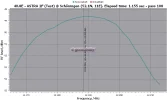
here´s the picture from 40.8°E (old position from today morning 09:30 a.m. UTC, picture recorded at 04:15 p.m.) -> -48,6 dBm

43.5E-_near_40E_a.webp

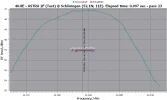
and the picture from 40.2°E (from today afternoon 04:15 p.m. UTC) -> -47,2 dBm

43.5E-_near_40E_b.webp
 
Transmitting whilst moving is almost unheard of. Deliberately anyway - its happened with runaways that I can think of :D

actually, the Telstar 1 satellite which happens to be your avatar had no geostationary orbit; it was moving constantly which meant that transmission time during each transit was limited to 20 minutes. ;)


So anyway, I guess we can expect 2F to be at its final orbital position soon; hopefully I won't have to shell out for a bigger dish still before Christmas. That money is badly needed for Christmas presents :-(
 
actually, the Telstar 1 satellite which happens to be your avatar had no geostationary orbit; it was moving constantly which meant that transmission time during each transit was limited to 20 minutes. ;)

Ok fair enough but thats ancient history isnt it :D

I was specifically thinking of the modern geosats ;)

BTW - the most famous runaway sat that kept on transmitting whilst moving was the Galaxy 15 zombiesat :D
 
Made a timeline, assuming 1.2 deg/day, and looking at this board's reports
(times in UTC)
8 Nov 14:16: TLE has Astra 2F stable on 43.5 East
8 Nov afternoon: still testing (Solly, BlindFaith, Huevos)
8 Nov evening: start of drift
9 Nov 00:00: 43.2 East
9 Nov afternoon: Huevos 11630...11670 & 12498 --> 1880...1920 & 1898 MHz --> DECT telephones
10 Nov 00:00: 42.0 East
10 Nov afternoon: Huevos 116xx --> DECT
11 Nov 00:00: 40.8 East
12 Nov 12:00: 39.0 East
15 Nov 00:00: 36.0 East
17 Nov 12:00: 33.0 East
19 Nov 12:00: 30.6 East
21 Nov 12:00: 28.2 East
To be taken with a grain of salt, & Huevos please no offense!
 
So, a couple of days to "settle in" and then start operations around 25/26 Nov?
 
9 Nov afternoon: Huevos 11630...11670 & 12498 --> 1880...1920 & 1898 MHz --> DECT telephones
I've held the DECT phone against the co-ax and it does show near frequencies, but I can't trigger this in normal use. Anyway if I am the only one to report them I think we should discount them.
 
Why you must be so cynical all the time?
As a matter of fact I see AND hear my dish moving, it's right outside my living room's window.
All satellites in the arc it covers from 30 to 72 East, are pointed correctly with USALS within 0.2°.
It can't get better than this.
Thank you.
Wasn't meant cynical. I guess you were right :) The source of carrier 12188H is moving westwards. If it is 2F, the last signal reports from 43,6E couldn't have been sent from 2F.
 
@ Huevos Having peaks 850 MHz apart at the same time in low- and high band is a bad sign.
Of course it can be (high power) phones of neighbours as well.
A couple of years ago I also had DECT frequency peaks of a neighbour, since he moved it's gone!
Anyway "it's a jungle out there" between 950 and 2150 MHz and it only gets worse.

@ BlindFaith: OK fine, forget it! :D
 
Having peaks 850 MHz apart at the same time in low- and high band is a bad sign.
Of course it can be (high power) phones of neighbours as well.
A couple of years ago I also had DECT frequency peaks of a neighbour, since he moved it's gone!
No neighbours within 100 metres of here, but like I say if the signals can't be confirmed from multiple locations we should discount them.
 
Having peaks 850 MHz apart at the same time in low- and high band is a bad sign.
Of course it can be (high power) phones of neighbours as well.
A couple of years ago I also had DECT frequency peaks of a neighbour, since he moved it's gone!
Anyway "it's a jungle out there" between 950 and 2150 MHz and it only gets worse.


So should L Band be renamed Hell Band?


(I'll get my coat)
 
In principle you're right. Alas there is no known beacon frequency.
All I can say is that 12188H is no beacon. Referring to the bandwith it's a wideband transmission but much too weak to tell what it could be or where it's coming from. So far it rmains a stationary signal to me. Maybe tomorrow you'll prove me wrong ;)

Beacon frequencies used to be publicly available. ISTR they were published on the Lyngsat site

Sadly its another bit of additional info thats been withdrawn over the last few years.
 
The Eutelsat beacons can be found here _http://www.satsig.net/eut2beac.htm and you`ll see some for 28.2 at the bottom are really close to 12188 (12501 is close enough) so it may well be that 12188 is indeed the beacon

Also worth noting that site says "Most beacons are nominally horizontal polarisation" which adds weight to it being the beacon
The beacon freq may well change when she reaches 28.2 so as not to wipe out any freqs in service

I know the above (linked) aint SES but....... there are beacons in that area and if people have apparently noticed the bird moving it would make sense that what is being picked up is the beacon

Now, if the freqs/TPs change when she is moving, it could be so as not to wipe out any other birds but on the other hand it could be that SES are trying something new

I have to pop out now so havent got time to go through the full thread again but if she is moving, give thought to the beacon theory, and if she is not moving...... I`ll go back into hiding and leave the experts to it lol
 
Status
Not open for further replies.
Back
Top