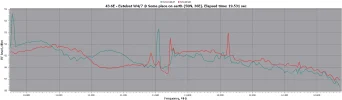
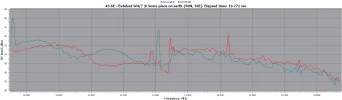
Astra 2G: Testing at 43.5°E

Status
Not open for further replies.
At the current rate of testing they will be on schedule to move in approx 2 weeks time to start at 28.3 east at the beginning of June.
From the list of frequencies tested, it looks like most of the D band is covered. I do wonder how much telemetry is tested via remote interrogation prior to actually illuminating transponders. If this is carried out alongside TP testing, then with it having sat at 21E for the last 4mths then they've had plenty of time to do various housekeeping tests which may not require RF.

Edit: William, just seen your post. Was going to create one myself but you beat me to it!
 
Test carriers observed so far by members here on satellites.co.uk:-

https://www.satellites.co.uk/forums/threads/astra-2g-testing-at-43-5°e.165161/page-6#post-925896

10714 H
10728 V
10744 H
10758 V
10773 H
10817 V
10800 H
10832 H
10847 V
10863 H
10876 V
10891 H
10906 V
11035 V
11114 H
11200 V
11224 H
11224 V
11264 H
11265 V
11315 V
11420 H
11565 V
11617 H
11692 V
11720 H
11758 H
11823 V
11915 H
11938 V
11954 H
11982 H
12015 V
12032 H
12051 V
12070 H
12090 V
12148 H
12465 H
12486 V

Out of the above I'm pretty sure 12465 H and 12486 V are 1F or something else.

11315 V and 11420 H could also be something else if we are to believe the tsenki.com site.
 
Out of the above I'm pretty sure 12465 H and 12486 V are 1F or something else.

11315 V and 11420 H could also be something else if we are to believe the tsenki.com site.

Yes I agree & have checked this out it is possible but as the satellite providers tell us very little we will have to wait & see.
 
11225 H/V and 11265 H tell me a lot! Tries to mimic the current 28A transponders (72 MHz split in two).

Can any satellite split transponders this way, or was this something 2G was specifically designed to do?
 
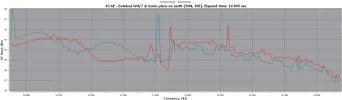
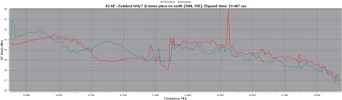
11617h 3db
10714h 3db
12051v 2db
 

Attachments

  • 10714h 3db.webp
    10714h 3db.webp
    77 KB · Views: 7
11615h 4db
10714h 3db
12051v 2.5db
 

Attachments

  • 11614h 4 db.webp
    11614h 4 db.webp
    84.8 KB · Views: 3
Again 10714 H,11612 H,11693 V,12051 V
 

Attachments

  • 10714 H++.webp
    10714 H++.webp
    76.7 KB · Views: 2
  • 11612 H+.webp
    11612 H+.webp
    70.4 KB · Views: 4
  • 11693 ++.webp
    11693 ++.webp
    72.4 KB · Views: 2
  • 12051 V++.webp
    12051 V++.webp
    66.1 KB · Views: 3
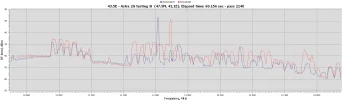
10714 H,11612 H,11693 V in my location
 

Attachments

  • 43.5E-RFScan_2140.webp
    43.5E-RFScan_2140.webp
    89.3 KB · Views: 6
11615h 4.5db strong signal it look 2g stronget 2e,2f
 

Attachments

  • 11615h 4.5 db.webp
    11615h 4.5 db.webp
    82.5 KB · Views: 6
Astrium and SES certainly aren't wasting any time starting daily testing. 6am CET and it looks like Solly has spotted carriers up, unless have been running all night?
 
Astrium and SES certainly aren't wasting any time starting daily testing. 6am CET and it looks like Solly has spotted carriers up, unless have been running all night?

all night will be same power signal
after 6 cet change power and signal
 
11225 H/V and 11265 H tell me a lot! Tries to mimic the current 28A transponders (72 MHz split in two).
Can any satellite split transponders this way, or was this something 2G was specifically designed to do?
It is Eutelsat 28A, not 2G, that has 72 MHz wide transponders between 11.2 and 11.45 GHz.
Inside one 72 MHz transponder fit two DVB-S transponders with symbolrate 27500.
Sorry I didn't write it down so clearly.
 
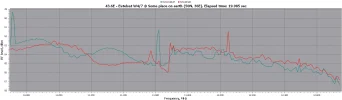
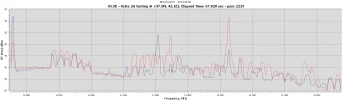
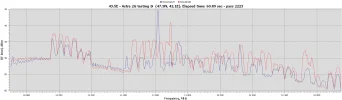
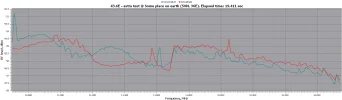
Suddenly 10714 H and 12051 V became very powerfull for me, more than 11612 H and 11693 V

P.S. Few minutes later everything returned back
 

Attachments

  • 43.5E-RFScan_2219.webp
    43.5E-RFScan_2219.webp
    90.8 KB · Views: 10
  • 43.5E-RFScan_2223.webp
    43.5E-RFScan_2223.webp
    86.9 KB · Views: 6
It is Eutelsat 28A, not 2G, that has 72 MHz wide transponders between 11.2 and 11.45 GHz.
Inside one 72 MHz transponder fit two DVB-S transponders with symbolrate 27500.
Sorry I didn't write it down so clearly.

Still not quite sure what you mean. Is 2G's frequency layout the same or different than the SES standard? thanks
 
Still not quite sure what you mean. Is 2G's frequency layout the same or different than the SES standard? thanks
It's looking more like the Eutelsat standard rather then the SES standard used at other positions, like Astra 1.

The difference here is that rather than splitting one 72MHz wide transponder into two virtual transponders as used on Eutelsat 28A, Astra 2G looks like it'll use two real 36MHz wide transponders. At least I think that's what we are assuming, anyway. Other Astra satellites usually use 26MHz wide transponders in that band.
 
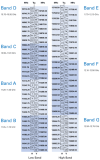
Astra 2G carrier tests so far + satellites currently active @ 28.3 east 07/05/15
frequency as per Astra's Plan Astra-2E/2F/2G
X = not active,
? may be 2E or 2F charts do not agree on some of these.

Band-D = 10.7 -10.95 GHz
Test on
Astra2G (Currently assigned satellite for this frequency)
10714H 2E
10729V 2E
10744H 2E
10758V 2E
10773H 2E
----------10788V 2E
10803H 2E
10818V 2E
10832H 2E
10847V 2E
10862H 2E
10876V 2E
10891H 2E
10906V 2E
Band-C = 10.95 - 11.2 GHz
10921H 2E x
10936V 2E
---------10964H 2F
---------10979V 2F
---------10994H 2F
---------11008V 2F
---------11023H 2F
11035V
---------11053H 2F
---------11068V 2F
---------11097V 2F
11114H
---------11126V 2F
---------11141H 2F x
---------11156V 2F x
---------11173H 2F
---------11181V 2F
11200V
Band-A = 11.2 - 11.45 GHz
11224H E28A
11224V E28A
11264H E28A
11265V E28A
--------11307H E28A
--------11307V E28A
11315V
--------11343V E28A
--------11344H E28A
--------11389H E28A
--------11390V E28A
11420H
--------11426V E28A
---------11428H 2F
Band-B = 11.45 - 11.7 GHz
-----------11465H 2F
----------11485H E28A
----------11502V E28A
11565V
----------11585H E28A
----------11604V E28A
11618 H 2F
----------11642V E28A x
----------11662H E28A
----------11675V 2F
----------11681V E28A
11692 V
Band-E = 11.7 - 12.10 GHz
11720H 2F
11739V 2E x
11758H 2E
--------11778V 2E ?
11798H 2E
---------10817V 2E
11823V
---------11836H 2E
---------10856V 2E
---------10876H 2E
---------10895V 2E
11914H 2E
11934V 2E
11954H 2E
---------11972V
11982H
---------11992H 2E
Band-F = 12.1 -12.5 GHz
12012V 2E
12032H 2E
12051V 2E
12070H 2E
12090V 2E
---------12110H 2E
---------12129V 2E
12148H 2E
---------12168V 2F
---------12188H 2F
---------12207V 2F ?
---------12226H 2F ?
---------12246V 2F ?
---------12266H 2F ?
---------12285V 2F ?
---------12304H 2F ?
---------12324V 2F ?
---------12344 H 2E
---------12363V 2E
---------12382H 2E
---------12441V 2E
12460H 2E
--------12480V 2E
Band-G = 12.5- 12,75 GHz
----------12515H 2F
----------12520V 2F
----------12522V 2F
----------12545H 2F
----------12552V 2F
----------12566H 2F
----------12573H 2F
----------12581V 2F
----------12582H 2F
----------12603V 2F
----------12604H 2F
----------12610V 2F
----------12633H 2F
----------12640V 2F
----------12663H 2F
----------12670V 2F x
----------12683H 2F
----------12692V 2F
----------12699H 2F

 

Attachments

  • astra1freqs.gif
    astra1freqs.gif
    121.3 KB · Views: 17
Status
Not open for further replies.
Back
Top