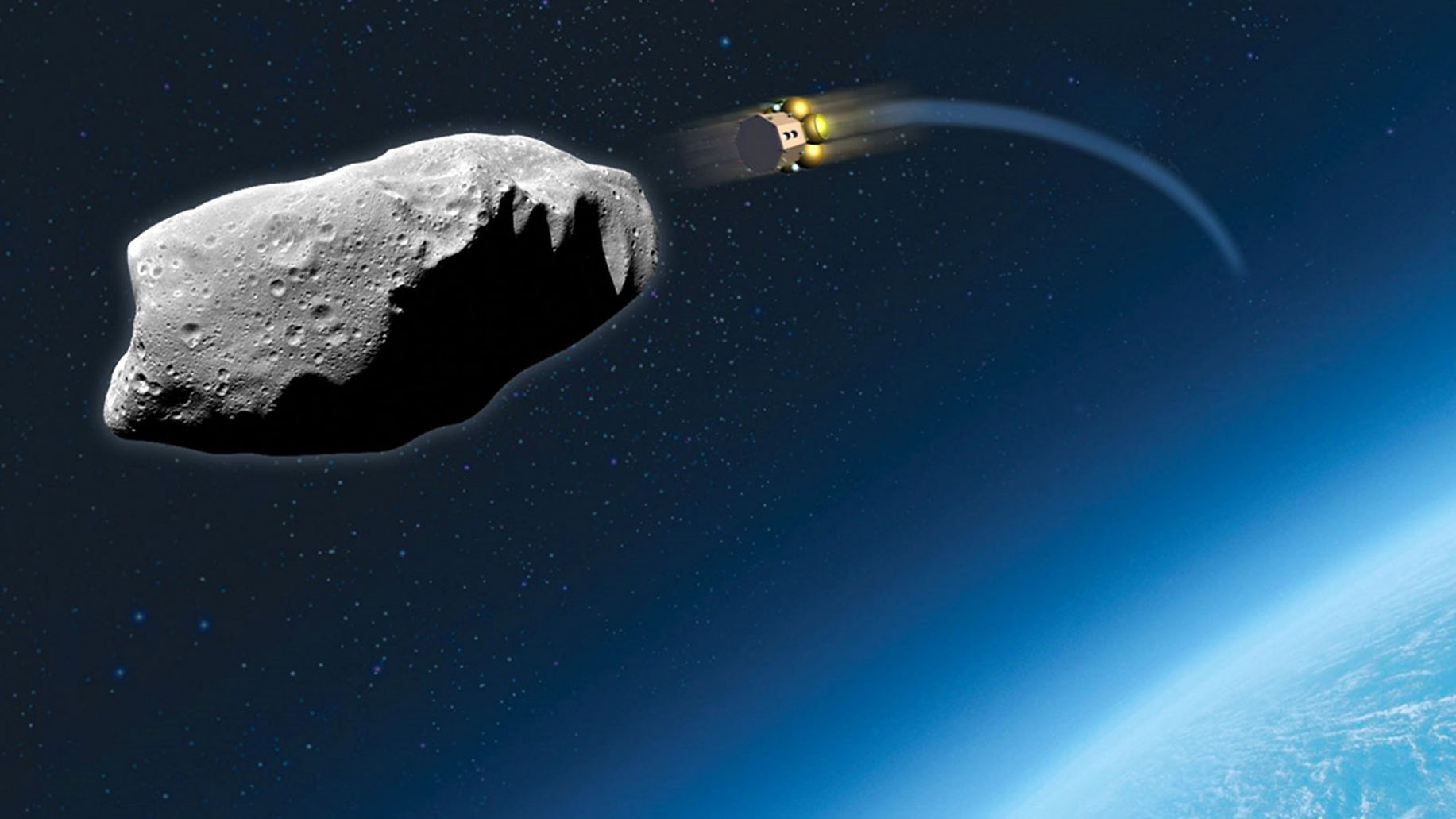
Could repurposed communications satellites deflect an incoming asteroid??

Analoguesat

Administrator
Staff member
My Satellite Setup
TM 5402HD
Sky+ UK.
My Location
Scottish Borders
An interesting discussion here about how repurposing soon to be launched comms sats could be used to deflect an incoming asteroid :oops::blink:


Do they still expect TV to be broadcast from satellites in the "very distant future"? :lol:

Would it not be better to have a fleet of anti-asteroid craft ready to go rather than trying to bodge satellites in various states of build and design into such weapons :confused:
 
Would it not be better to have a fleet of anti-asteroid craft ready to go rather than trying to bodge satellites in various states of build and design into such weapons :confused


An interesting discussion here about how repurposing soon to be launched comms sats could be used to deflect an incoming asteroid :oops::blink:
URL]..
Agree with ozumo: how the hell can "relatively-small by comparison" sats "deflect" meteorites arriving at "high velocities" and in various directions???

PS: and WTH would those "deflected meteorites" actually "finish up"??

Sounds like trying to kill tanks with actual peashooters!:rolleyes:
 
The only reason I can see the suggestion of using comms sats its just because they are readily available with a dozen or so being manufactured every year. These wouldnt be used for deep space tv - all they are needed for is for them to be sacrificed to smash into the asteroid. Then its the old idea of mass and distace - if you have a asteroid on a collision course which is far enough out you only need to defect the trajectory a few inches so it skims past the planet instead of wiping out all life where it lands. Multiple impacts from 5 ton craft might do that.
 
. Multiple impacts from 5 ton craft might do that.
I doubt that very much, they would need to deflect the asteroid millions of miles out in space in order to deflect past the earth, 22,000 miles would deflect it from Birmingham to London, now there's an idea:rolleyes:
 
I doubt that very much, they would need to deflect the asteroid millions of miles out in space in order to deflect past the earth, 22,000 miles would deflect it from Birmingham to London, now there's an idea:rolleyes:
:-rofl2
 
I doubt that very much, they would need to deflect the asteroid millions of miles out in space in order to deflect past the earth, 22,000 miles would deflect it from Birmingham to London, now there's an idea:rolleyes:
But thats the entire point - you send them out on a one way trip into deep space and impact with it millions of miles away where there is a chance to deflect the orbit sufficiently to miss the planet. Its the mass of the satellite thats important here. It could be a 5 ton lump of lead thats flung at the incoming threat, this study just came to the conclusion of using comms sats as fact that new comms sats are readily available (and easily replacable!)

There is no suggestion that the sats should wait at geostationary orbit and attempt to impact there - its far far too late by then.
 
Then again, that sounds like trying to hit a (relatively speaking!) cricket ball at "n" hundreds/thousands kms with that peashooter - more likely to totally miss it or, at best, slightly deflect in the wrong direction because the hit was "off-centre".
 
22,000 miles would deflect it from Birmingham to London, now there's an idea:rolleyes:
Would be better if they deflected it to Birmingham
 
Would be better if they deflected it to Birmingham
It is all a matter of perspective, I would let you choose then, it makes no odds to a Northerner:rolleyes:

But thats the entire point - you send them out on a one way trip into deep space and impact with it millions of miles away where there is a chance to deflect the orbit sufficiently to miss the planet. Its the mass of the satellite thats important here. It could be a 5 ton lump of lead thats flung at the incoming threat, this study just came to the conclusion of using comms sats as fact that new comms sats are readily available (and easily replacable!)

There is no suggestion that the sats should wait at geostationary orbit and attempt to impact there - its far far too late by then.
The equivalent of throwing a ripe tomato at the HST, zero effect apart from a messy windscreen that cleared in 1/10th second

Then again, that sounds like trying to hit a (relatively speaking!) cricket ball at "n" hundreds/thousands kms with that peashooter - more likely to totally miss it or, at best, slightly deflect in the wrong direction because the hit was "off-centre".
Agreed, do they actually pay these intellectuals hard cash to talk such rubbish.
 
Back
Top