Just Sharing This Dish Alignment TPs

Gladstones

Member
My Satellite Setup
Zone 2 Fixed at Astra 2
Gibertini XP 75 cm fixed at 30 west
Gibertini XP 1 meter motorised 53e to 27.5w
Technomate TM2600
Inverto Ultra Black
LG 55 UH770V
Octagon SX88+SE
My Location
Midlothian
Hi Good afternoon
Here are the strongest tps in the UK (Scotland) to align your dish

28.2 east 10714H22000
23.5 east 11739V29900
19.2 east 10773H22000
13 east 12360H29900
30 west 10730H27500

Please correct me if its not right
thank you
 
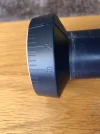
can any expert explain how to adjust skew on fixed dish with marking on the lnb
 
Always useful to fine tune initial alignment by shifting to weak transponders.
 
Always useful to fine tune initial alignment by shifting to weak transponders.
Can we have the weakest tps for the above sats
 
Can we have the weakest tps for the above sats
Use the weakest transponder you can currently receive.

Some satellites have a skew offset, about 3.5° (in a clockwise direction when looking at the dish face) for Eutelsat owned satellites and 7.5° for Astra. Without skew control you'll have to compromise and decide which satellites you want to maximise the signal from.

edited to correct Astra skew offset (thanks a33)
 
Last edited:
What is skew offset
Please explain the reading on the lnbs
 
What is skew offset
Please explain the reading on the lnbs


Skew offset is where the operational skew from the satellite differs from the theoretically calculated skew.
As "ozumo" has pointed out, one example is the skew offset for the Eutelsats.

The largest skew offset I am aware of is on the Optus satellites. If I remember correctly it is about 45 degrees out from the theoretical skew making reception on a motorised arc a waste of time.
For the Eutelsat offset of +3.5 degrres it does not really impact reception on a motorised arc, polarity skew is quite forgiving compared to azimuth and elevation.
 
Last edited:
Readings are -75 to +75
 

Attachments

  • 61A0E5BD-C3D7-4CA5-B443-CC663038A9BB.webp
    61A0E5BD-C3D7-4CA5-B443-CC663038A9BB.webp
    415.2 KB · Views: 17
  • 6F313C67-57D4-4B5D-B0A9-C8A356DDCF10.webp
    6F313C67-57D4-4B5D-B0A9-C8A356DDCF10.webp
    507.2 KB · Views: 14
Readings are -75 to +75


Negative values are anti clockwise rotation when facing the satellite from behind the dish.
Positive values are clockwise rotation when facing the satellite from behind the dish.

The numerical values are the number of degrees rotation in either direction.
 
Say the skew for 13 east according to dishpointer is -10.6
How to get to this reading if using scale on lnb.
 
Is that right
This point to be at zero on lnb holder to obtain-10.6
 

Attachments

  • 5DA96325-3494-41C5-8DC2-5974716FB13E.webp
    5DA96325-3494-41C5-8DC2-5974716FB13E.webp
    142.8 KB · Views: 15
Is that right
This point to be at zero on lnb holder to obtain-10.6
Yes. The line just to the right of the arrow point is 10°, 15° is the line to the left.. However this assumes the pole is plumb & the LNB markings are accurate. Use them as a starting point, it's best to use a signal meter or receiver when peaking the dish & skew.
 
Say the skew for 13 east according to dishpointer is -10.6

Dishpointer.com does not take the pre-skew into account for 13e, it seems.
So 3.535 should be added to your reported -10.6, which leaves about -7.1.

For Astra at 19.2, dishpointer correctly takes the preskew of 7.5 degrees into account.
(That is a problem with many calculators: you often don't know how they calculate, and what assumptions are used.
I use my own calculator, nowadays...)

But, as ozumo wrote, peak skew with actual testing!
It is not uncommon, that the internal antennas inside the LNB aren't mounted exactly "plumb". So the proof of the pudding, is in the eating?!

Greetz,
A33
 
Is this a troll thread?

....as a side note, for very strong signals, skew doesn't really matter. However, if you really want to weaken the signal, you can always use a wet towel method.
 
Is this a troll thread?

....as a side note, for very strong signals, skew doesn't really matter. However, if you really want to weaken the signal, you can always use a wet towel method.
What’s make you think it’s a troll
& what is wet towel method?
 
...what is wet towel method?

The "wet tea towel" simulates rain fade of various margins by covering part of the dish with a suitably damp tea towel, allowing you to "fine tune" your installation.

1. Get a tea towel and one or two clothes pegs...

2. Soak the tea towel under a tap & ring it to help remove some of the water, but don't ring it too hard!

3. Introduce the wet tea towel down from the top of the dish face so that it progressively covers more of the dish until the signal you had prior to using the wet tea towel disappears - at this point, raise the tea towel back up the face of the dish slowly until you get the wanted signal back at a weak but usable level (i.e. it locks without picture break up), and once in position clip it to the top rim of the dish using the clothes pegs (or anything suitable to hold it in position - if only about half of the tea towel is covering the dish face, you might get away with it lying loose.
Notes: (a)If the wanted signal is really strong & the wet tea towel fully draped over the face of the dish face doesn't cause the signal to be lost, then soak the tea towel under the tap again and **don't** ring it out to force it to hold more water. If this still doesn't weaken the signal enough to cause loss, then either get a bigger tea towel(!) or work with what you have with the current tea towel covering part of the dish face (which should have introduced at least some signal loss otherwise either something is wrong or you're using a monster sized dish!), clipped on at the top of the dish rim. (b) if introducing any part of the wet tea towel on the dish face causes the signal to be lost, then your received signal was already very marginal to begin with - work on improving that first, then introduce the wet tea towel. If you can't improve your signal levels before even introducing the wet tea towel, then you probably already have about as good a signal as you can get with your setup otherwise.

4. With the wet tea towel in place, carefully but firmly tug the dish on its rim at its sides and top & bottom - if your signal meter readings show an increase in signal quality from tugging the dish in one particular direction, then adjust either the azimuth or elevation of the dish to ensure you have it pointing accurately at the wanted satellite, getting the best possible signal reading with the wet tea towel still in place.
Notes: (a) after doing the above, go back and repeat 3 & 4 again. (b) if tugging the dish sides shows a loss of signal quality in all directions (up, down, left, right) then you likely have the dish pointing at its best position. Go to 5.

5. With the tea towel remaining in place, now check the skew of the LNB, adjust for best signal quality results. Do this for several different transponders on the same satellite (if you can receive more than one) to get the best compromise.

6. Once you've adjusted the LNB skew for the best signal quality on both horizontal & vertical polarised signals, go back to 4 and tug the dish on its rims as a final signal check - if the signal quality level goes down in all directions then remove the wet tea towel from the face of the dish - your job is done! Otherwise, you'll need to fine tune the dish alignment again

In general, it is best to try this using the weaker received transponders from the one satellite position though in some cases it might be better to home in on a stronger signal first and then switch to a weaker one (what determines what is a stronger & weaker transponder will depend on location & the satellite in question, as an example in N. Ireland the signals from the Astra 2G European beam at 28E are a bit weaker than the UK spot beam signals from 2E/2F/2G at the same position). Transponders that broadcast using DVB-S2 8PSK as opposed to DVB-S tend to be a bit more "touchy" with incoming signals, especially concerning accurate skew adjustment and so such transponders are prime candidates for this method of accurately aligning the dish.

Also bear in mind that the wet tea towel will eventually dry itself out, and the tea towel might go from soaking to bone dry in a matter of minutes in dry & warm/hot weather, so you might need to re-soak the tea towel periodically.
 
Back
Top