
You are using an out of date browser. It may not display this or other websites correctly.
You should upgrade or use an alternative browser.
You should upgrade or use an alternative browser.
fibre lnb from global invacom
- Thread starter powel000
- Start date

ralphmagno
Regular Member
- My Location
- naples italy
hello,
never used one yet but it takes all the transponders and groupes them togeather and you can send the signal over a long fiber run and
on the other end it degroups and restores it so the sat receiver can see the signal again.
if you have a long run from the dish to the receiver it would help a lot.
if you are trying to receive something loke bbc 1 and bbc 2 it will not give a signal that is not there.
ralph
never used one yet but it takes all the transponders and groupes them togeather and you can send the signal over a long fiber run and
on the other end it degroups and restores it so the sat receiver can see the signal again.
if you have a long run from the dish to the receiver it would help a lot.
if you are trying to receive something loke bbc 1 and bbc 2 it will not give a signal that is not there.
ralph

timo_w2s
Retired moderator
- My Satellite Setup
- Vu+ Duo 4K SE
Dr.HD F15
- My Location
- Maidenhead, UK & Helsinki, Finland
Perhaps one day fibre LNBs will be considered standard - no signal loss between the receiver and dish and no interference problems. The only downside (apart from cost) is having to run another cable for powering the LNB.

- My Satellite Setup
- See signature
- My Location
- Northants, Midlands UK & Lanzarote, Canary Islands

Robbo
Retired Mod
- My Satellite Setup
- TM6800HD, TM1000, TM600 Linux,TM2200 motor, Channel Master 1.2m motorised, TD110 dish Meter=Satlook Micro+G2 NIT
- My Location
- Gravesend,Kent,UK
Hi, yes I have tested a couple of them. These are merely to simplify large system design or to remove problems due to attenuation in standard coaxial cables. On a normal length cable run, performance is no better. Both polarities and bands are all sent down a single fibre cable.
Robbo
Retired Mod
- My Satellite Setup
- TM6800HD, TM1000, TM600 Linux,TM2200 motor, Channel Master 1.2m motorised, TD110 dish Meter=Satlook Micro+G2 NIT
- My Location
- Gravesend,Kent,UK
Well, from my experience, ( I have only tried two mind), there was no difference on the particular satellite I tried them on;7W verticals, I got exactly the same readings as I did using my Inverto twin LNB.

Telia
ASBO Club Member - Persona non grata
- My Satellite Setup
- Vu+ Duo PVR 1GB HDD
Channel Master 1.2m with Jaeger SMR1224.
- My Location
- Stockholm, Sweden
Funny how the magazine Telesatellite reviewed the Fibre optic LNB and said it made dramatic improvement in SNR readings.
The funny part is that the Fibre LNB was in the center of the dish and the normal LNB was off center in the photo.
Of course it would show higher reading in that scenario, but they didn't say that in the review which only shows how commercial that magazine is.
The funny part is that the Fibre LNB was in the center of the dish and the normal LNB was off center in the photo.
Of course it would show higher reading in that scenario, but they didn't say that in the review which only shows how commercial that magazine is.

Huevos
Satellite Freak
- My Satellite Setup
- 57E to 58W, C-band and Ku, DVB-S2, 4:2:2 and blindscan.
- My Location
- 38.5ºN, 0.5ºW
They are starting to use them quite a bit round here and this is pretty fringe reception. If you are worried about fringe reception you can go up on dish size. With long cable runs it's easier to hide the dish away in a convenient place. And when you split the cost of a 2.4m+ dish between 32 houses plus the price of a two or four outlet MDU depending on the requirement of each neighbour the overall individual cost is pretty cheap compared to the alternatives. A friend of mine was connected to a fibre system recently and the cost was 180€ per house. As it was done by vote of the residents association all the residents had to pay even if they didn't want to be part of the system. That price paid for the fibre optic to a box on the front wall of each house. Then those who wanted to be connected had to buy/pay for a 2 or 4 outlet MDU.PaulR said:From what I've read the fibre LNBs are not suited to fringe reception as they are not as sensitive as the best RF signal LNBs. They're also expensive!
Robbo
Retired Mod
- My Satellite Setup
- TM6800HD, TM1000, TM600 Linux,TM2200 motor, Channel Master 1.2m motorised, TD110 dish Meter=Satlook Micro+G2 NIT
- My Location
- Gravesend,Kent,UK
Yep, pretty ideal for that type of system I would have thought. The house holder can then have virtually as many outlets as they want if a quattro unit with a multiswitch were to be used.

- My Satellite Setup
- -----------See sig-----------
- My Location
- Wirral, NW UK
It's not my direct experience but based on former member Snap's testing in Madrid. His results were so bad that he returned the LNB to the suppliers. Perhaps his was a bad sample? Perhaps they've improved the LNB? Who knows.Huevos said:They are starting to use them quite a bit round here and this is pretty fringe reception.
halb
Member
- My Satellite Setup
- 3.1 m motorized solid dish, c-band and ku-band (invacom lnb). Mostly aimed at Thor5/6, Sirius and 34.5W. Dreambox 7000, Nokia 9902S,Humax HDCI2000,VANTAGE HD 8000S
- My Location
- Barcelona, Spain
Perhaps I should have investigated a bit further regarding the noise figure of the Fiber LNB from Invacom before actually buying one. The data sheet says 0.5 dB. I think that is what you get. I've spent a good 3 days fine tuning the fiber lnb now and it performs poorly compared with my existing Invacom quatro QTF 031 or Swedish Microwave single polarity LNB's. I've lost most of the fringe reception channels I was aiming at (1 deg W - in a "deep null" area close to Barcelona). It is difficult adjusting this LNB as the analogue-digital-analogue conversion (LNB->fiber optic cable, MDU box -> standard output), seems to cause the signal to arrive at the receiver in discrete steps of 4%, where previously I could detect variations of 1%. The more powerful stations have improved significantly, the ones without bad weather reserve have disappeared altogether. Now, I'm about to mount the good old QTF 031 again and regain the hazzle of having to use more than one receiver (DiseqC swithes are ruled out as the loss in them eats away all my signal, so I've been using one receiver for each polarity VH,VL,HH and HL). Perhaps like fellow member Snap I also received one of the poorer Fiber LNBs - after all half of them must be below average - but unless I did something wrong in which case there's still hope, I'll go back to the safe old technology. I'd appreciate any help anyone might have on this topic as well as links to non-commercial testing reports. My dish is a prime-focus 3.1 meter (25meter antenna cable), all lnb's I've tested are also prime focus versions using the standard C120 adjustable feedhorn from Invacom.
My understanding is that there at first was no C120 fibre LNB's from Invacom, those that were sold was "home-made" from the offset LNB's... I hope that is the case or otherwise invacom has a bad production line with half faulty LNB's passing QC.
Most of us are waiting to see how this tech matures, I for one hope I can change my LNB's when I have enough cash/thinks it's worth the cash
Most of us are waiting to see how this tech matures, I for one hope I can change my LNB's when I have enough cash/thinks it's worth the cash

Moradabad
SAT SPECIALIST INDIA
- My Satellite Setup
- One 12 Feet Heavy Antenna, one 10 Feet Double Rib Antenna
Dreambox Dm500S, DM 7025. HD Receiver,Envision,
Eurostar receiver, 4 Dual LNBS, 5 PFA Lnbs
- My Location
- india
halb said:Perhaps I should have investigated a bit further regarding the noise figure of the Fiber LNB from Invacom before actually buying one. The data sheet says 0.5 dB. I think that is what you get. I've spent a good 3 days fine tuning the fiber lnb now and it performs poorly compared with my existing Invacom quatro QTF 031 or Swedish Microwave single polarity LNB's. I've lost most of the fringe reception channels I was aiming at (1 deg W - in a "deep null" area close to Barcelona). It is difficult adjusting this LNB as the analogue-digital-analogue conversion (LNB->fiber optic cable, MDU box -> standard output), seems to cause the signal to arrive at the receiver in discrete steps of 4%, where previously I could detect variations of 1%. The more powerful stations have improved significantly, the ones without bad weather reserve have disappeared altogether. Now, I'm about to mount the good old QTF 031 again and regain the hazzle of having to use more than one receiver (DiseqC swithes are ruled out as the loss in them eats away all my signal, so I've been using one receiver for each polarity VH,VL,HH and HL). Perhaps like fellow member Snap I also received one of the poorer Fiber LNBs - after all half of them must be below average - but unless I did something wrong in which case there's still hope, I'll go back to the safe old technology. I'd appreciate any help anyone might have on this topic as well as links to non-commercial testing reports. My dish is a prime-focus 3.1 meter (25meter antenna cable), all lnb's I've tested are also prime focus versions using the standard C120 adjustable feedhorn from Invacom.
May be Invocom started there Manufacturing in China lol
halb
Member
- My Satellite Setup
- 3.1 m motorized solid dish, c-band and ku-band (invacom lnb). Mostly aimed at Thor5/6, Sirius and 34.5W. Dreambox 7000, Nokia 9902S,Humax HDCI2000,VANTAGE HD 8000S
- My Location
- Barcelona, Spain
The fiber lnb from Invacom is made in China! Like most things these days! I still haven't given up fine tuning to obtain better reception than with the QTF 031. Before settling for the quatro 3 years ago I tried out two other Invacom Lnb's with single output. The quatro was slightly better than the single output Invacom lnb's. I'd been waiting for the C120 version of the fiber lnb for more than a year - and that simply added to the disappointment. Do any of you have an idea which lnb performs better at the low end of the band? Like VL and/or HL? Those are the frequencies I'm looking to improve. Or perhaps that is just pure chance. I might try out some more high performance flange lnb's.
The regular Invacom lnbs come with a certificate showing the gain vs. frequency. Nice feature. The fiber lnb was not shipped with such a certificate. Perhaps some sort of sign that Invacom themselves realise that the fibers don't outperform the old technology on extremely weak signals. I guess I set my hopes too high. I guess the next step is looking for a larger dish (or perhaps wait for the first receiver with a direct fiber input).
The regular Invacom lnbs come with a certificate showing the gain vs. frequency. Nice feature. The fiber lnb was not shipped with such a certificate. Perhaps some sort of sign that Invacom themselves realise that the fibers don't outperform the old technology on extremely weak signals. I guess I set my hopes too high. I guess the next step is looking for a larger dish (or perhaps wait for the first receiver with a direct fiber input).
@halb
I wonder how does perform your SMW against OTF-031? Is there significat difference in signal quality? If yes, which works better for you?
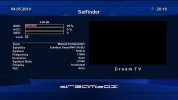
I have borrowed SMW Q-PLL type L with +/- 10 kHz stability and tested on fringe signal from Eutelsat W7.
When i compared to Invacom QDF-031 i see that there is aprox. 0.6 dBi average difference in favor to Invacom. But I also noticed that AGC (automatic gain control) is not going crazy with SMW as with invacom does, i guess this is due to LO stability?
Does anyone have detailed experience with Swedish Microwaves?
I wonder how does perform your SMW against OTF-031? Is there significat difference in signal quality? If yes, which works better for you?
I have borrowed SMW Q-PLL type L with +/- 10 kHz stability and tested on fringe signal from Eutelsat W7.
When i compared to Invacom QDF-031 i see that there is aprox. 0.6 dBi average difference in favor to Invacom. But I also noticed that AGC (automatic gain control) is not going crazy with SMW as with invacom does, i guess this is due to LO stability?
Does anyone have detailed experience with Swedish Microwaves?
Attachments

halb
Member
- My Satellite Setup
- 3.1 m motorized solid dish, c-band and ku-band (invacom lnb). Mostly aimed at Thor5/6, Sirius and 34.5W. Dreambox 7000, Nokia 9902S,Humax HDCI2000,VANTAGE HD 8000S
- My Location
- Barcelona, Spain
Hello younowho and fellow sat-fans,
I can't claim to have a lot of experience with the SMW lnb's. I bought a SMW LNB DRO 11.3 (frequency range 12.25 - 12.75 Ghz, Gain 54dB typ.) for flange mounting in order to receive a hard to reach transponder on the late Thor II satellite. It matched the Invacom LNB, but did not improve the signal. And since I was limited to high band and one polarisation at a time I removed the lnb again after a few days. Didn't store any data, sorry. I tried zooming in on these weak transponders with my Dreambox 7000, but the receiver simply wasn't sensitve enough. The Vantage Digital 8000S and Nano XX, although inferior when it comes to software, are better at locking in on a very weak signal. (That goes for C-band as well). Of the Invacom lnbs I've tested (the fiber, the SNF 031 and the QTF 031) the QTF 031 outperforms both the SNF 031 and the Invacom fiber lnb. These days I'm aiming for the low frequencies which is why the SMW lnb stays in the cupboard.
I can't claim to have a lot of experience with the SMW lnb's. I bought a SMW LNB DRO 11.3 (frequency range 12.25 - 12.75 Ghz, Gain 54dB typ.) for flange mounting in order to receive a hard to reach transponder on the late Thor II satellite. It matched the Invacom LNB, but did not improve the signal. And since I was limited to high band and one polarisation at a time I removed the lnb again after a few days. Didn't store any data, sorry. I tried zooming in on these weak transponders with my Dreambox 7000, but the receiver simply wasn't sensitve enough. The Vantage Digital 8000S and Nano XX, although inferior when it comes to software, are better at locking in on a very weak signal. (That goes for C-band as well). Of the Invacom lnbs I've tested (the fiber, the SNF 031 and the QTF 031) the QTF 031 outperforms both the SNF 031 and the Invacom fiber lnb. These days I'm aiming for the low frequencies which is why the SMW lnb stays in the cupboard.
Hi All,
Thought I would post a general reply to you all about our Fibre LNB's.
First thing to make very clear is these LNB's do not perform in any way better than a standard LNB. Their Noise figure is typically 0.7dB and whilst we do make a version for a Prime Focus Dish you should not confuse it with our very Low Noise Rf lnb's. It will NOT perform any better.
We launched the Fibre LNB range to over come the need to have four coaxial cables from a quattro lnb feeding a IRS system as used in apartment buildings. The lnb has the ability to feed upto 32 locations offering every location 4 sat feeds suitable for either a multi switch or direct into satellite receivers.
Many people have been using our Fibre LNB more as a solution for very long cable runs between dish and Sat receiver. By using fibre connection between dish and receiver it is possible to go distances of upto 5 miles although please remember two very important facts.
1. The LNB will require power which is typically supplied by a coaxial cable.
2. As the system is designed to be split between a number of converters, using it as a point to point solution will mean that TOOOOOOOO much light power will hit the converter and the system will not function correctly . You MUST install an optical attenuator of around 10dB if you intend to use our product as a solution to overcome long distances.
Hope the above gives you guys some help but feel free to ask questions if you want to.
Thought I would post a general reply to you all about our Fibre LNB's.
First thing to make very clear is these LNB's do not perform in any way better than a standard LNB. Their Noise figure is typically 0.7dB and whilst we do make a version for a Prime Focus Dish you should not confuse it with our very Low Noise Rf lnb's. It will NOT perform any better.
We launched the Fibre LNB range to over come the need to have four coaxial cables from a quattro lnb feeding a IRS system as used in apartment buildings. The lnb has the ability to feed upto 32 locations offering every location 4 sat feeds suitable for either a multi switch or direct into satellite receivers.
Many people have been using our Fibre LNB more as a solution for very long cable runs between dish and Sat receiver. By using fibre connection between dish and receiver it is possible to go distances of upto 5 miles although please remember two very important facts.
1. The LNB will require power which is typically supplied by a coaxial cable.
2. As the system is designed to be split between a number of converters, using it as a point to point solution will mean that TOOOOOOOO much light power will hit the converter and the system will not function correctly . You MUST install an optical attenuator of around 10dB if you intend to use our product as a solution to overcome long distances.
Hope the above gives you guys some help but feel free to ask questions if you want to.
FTTH
Member
- My Satellite Setup
- Virgin Media Cable TV.. BOoo Hissss
- My Location
- Gosport, Hampshire, UK
I've been tasked with supplying and designing the fibre connectivity for a few multi-dwelling installations.
Some Big installs, others where the Dish needed to be out of sight and a distance away.
I have to say as long as good quality cable and components are used you can get really good results. Be cautious though, some of the cables that are being sold for SAT use are pretty poor and will limit the reliability and amount of subscribers you can achieve.
We generally work to the Global recomendation of 32 subscribers max, but have pushed one of our installs to see what was achieveable and managed 128 subs.
If anyone wants any more info on fibre connectivity (cables/boxes/splitters) just drop me a PM.
Some Big installs, others where the Dish needed to be out of sight and a distance away.
I have to say as long as good quality cable and components are used you can get really good results. Be cautious though, some of the cables that are being sold for SAT use are pretty poor and will limit the reliability and amount of subscribers you can achieve.
We generally work to the Global recomendation of 32 subscribers max, but have pushed one of our installs to see what was achieveable and managed 128 subs.
If anyone wants any more info on fibre connectivity (cables/boxes/splitters) just drop me a PM.