Why only uk uses oval shaped mesh dishes?

Pride Of Cucamonga

Regular Member
My Satellite Setup
Cheap piece of junk Spanish (Tecatel) 120cm(x110) dish, Inverto Ultra twin LNB and Sky HD box.
My Location
Valencia (city)
Just a thought, why do no countries other than UK/Ireland use oval shaped mesh dishes?
 
As far as I'm aware, it was down to sky being as cheap as possible when they first went digital, using the smallest dish they could get away with before they were under-performing, aswell as for aesthetics, smaller dish = less intrusive than say a 60 or 80cm round dish as used with analogue satellite television previously...
 
They are NOT mesh dishes (despite all the mis-descriptions on the internet) - they are perforated dishes used for Ku band signals (Sky, Freesat etc). Mesh dishes are something completely different used for C band signals and are neet to useless for Ku band.
 
Small oval dishes are also used in the USA & Canada.
 
I was led to believe that the reason they're oval is to maximise the rejection of adjacent satellites whilst keeping the surface area as small as necessary.
 
Small oval dishes are also used in the USA & Canada.

I thought their oval (wider than high) dishes were multifeed dishes?
AFAIK, these are different from the UK oval dishes, which still are paraboloid (parabolic vertically AND horizontally) I presume.

But I might be wrong. Have touched neither of them myself....

Greetz,
A33
 
AFAIK the ubiquitous Sky dishes that have been fitted since the launch of its digital service was designed mainly for aesthetics, the wider than tall design (along with perforations) being seen as less of an eyesore than the traditional offset dishes that are slightly taller than wide - also rumoured that a certain R. Murdoch wanted to reduce the size of dish required to receive the digital service compared to that for the analogue service**.

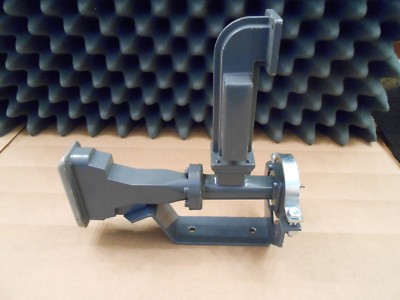
A side effect with this style of dish is that it has a narrower beamwidth to help reduce interference from nearby satellites - but it also means that a special Ku Band LNB is ideally needed with an oval feedhorn to match the dish face (as opposed to a circular feedhorn for general offset dishes). The design was intended to optimise the dishes for reception in the UK & Ireland with the restricted skew options built in to the LNB (required because of the oval feedhorn) as well as a smaller horizon angle offset than most general Ku Band offset dishes (20 degrees compared to usually between 24 to 26 degrees) - probably to compensate for the low-ish elevation angle in northern & western locations looking at 28.2 East.

Finally, by bundling their own unique style of dish for installation (along with specific approved receivers, a much more "proprietary" change compared to the analogue service), it pretty much advertised the service since anyone seeing such a dish erected on a property in public view made people assume that they had Sky Digital - not quite as big of an assumption these days given how long the service has now been running, and how quite a few households now use such dishes for Freesat or FTA reception from 28.2 East (or in a few cases, aimed at other satellite positions), but it was quite an effective tactic of essentially using their customers as a promotion tactic without spoiling the face of the dishes with company logos (which some Pay-TV providers in Continental Europe do) that would at some point go out of date.

Other oval shaped dishes similar to the Sky Digital design are often seen for satellite internet installations, or for offset Ku/Ka band dishes that are intended for multi-LNB reception over several close satellite positions - some examples include toroidal dishes like the Wavefinders, the Visiosat/Cahors Bisat dishes, and in North America the likes of the DirecTV KaKu dishes that are designed for reception across several satellite positions using a proprietary set of LNBs.


** Considering that the Sky Digital service launched using an FEC of 2/3 on DVB-S compared to most other European providers at the time that were 3/4 or higher, there's probably some truth to it - when Astra 2D went into service, the transponders used an FEC of 5/6, but the higher powered spot-beam helped to compensate for the higher SNR required. Coincidently, a Symbol Rate of 27500 and FEC 2/3 has the same net bitrate capacity as an SR of 22500 with FEC 5/6, as used for the Astra 2D (10.7 - 10.95 GHz) frequencies.

 
Elliptical/Oval dishes can be used for multi feed systems as can circular dishes,
Of course.
As can diamond-shaped dishes, triangle shaped (piece of pie) dishes, etc, etc.

But not all dishes are MEANT to be used for multifeed reception, as Fisty McB also indicates.
A multifeed dish has a focal line, instead of a focal point, and consequently has a different curvature (namely: circular) in the horizontal plane.
See e.g. toroidal dishes (like SMW OA1600).
So they really are different types of 'wider than high' dishes.

Greetz,
A33
 
Last edited:
We here in the US use oval (elliptical) dishes for more then 2 satellites, Dish Network and Direct TV use them for their constellation of satellites, dish uses them for thier 110, 119 and 129 satellites,
 
Some great replies here. The British are certainly more concerned about the external aesthetics of their homes vs continental europe. Not sure why. There was also the whole snob element around satellite TV in the 1990s to overcome.

So the oval dish has a relatively stronger signal horizontally than vertically? What i don't quite understand is why the LNB appears to be in the opposite dimension - i.e. narrower horizontally, longer vertically.
 
Snob element?!

I find that surprising as it was noticeable that the early adopters, judging by the proliferation of dishes, were chiefly social-housing tenants.
 
Snob element?!

I find that surprising as it was noticeable that the early adopters, judging by the proliferation of dishes, were chiefly social-housing tenants.
Yes, the snob element *against* it!
 
I was working for UKRS back when BSB and Sky were competing, there was a marked difference in the demographic purchasing each system. BSB didn't have the image problem associated with Sky, probably due to the much smaller dishes and squarials. That said I do remember quite a few of the BSB systems were replacing older Salora (or Nokia?) dishes with a magnetic polariser. Sky were on the 60CM black perforated at the time and then we switched to an large oval dish with a cylindrical LNB, maybe an Orbit? I used to detest the damn things having to build each from a flatpack, those stupid plastic plugs that had to be pushed into the rear frame before screwing on the reflector. BSB stuff was pretty much straight out the box and on the wall.

Thanks to Sky I got to know most of the council estates in Sussex very well.
 
I was working for UKRS back when BSB and Sky were competing, there was a marked difference in the demographic purchasing each system. BSB didn't have the image problem associated with Sky, probably due to the much smaller dishes and squarials. That said I do remember quite a few of the BSB systems were replacing older Salora (or Nokia?) dishes with a magnetic polariser. Sky were on the 60CM black perforated at the time and then we switched to an large oval dish with a cylindrical LNB, maybe an Orbit? I used to detest the damn things having to build each from a flatpack, those stupid plastic plugs that had to be pushed into the rear frame before screwing on the reflector. BSB stuff was pretty much straight out the box and on the wall.

Thanks to Sky I got to know most of the council estates in Sussex very well.

Did BSB manage smaller dishes through a stronger signal? Was the trade-off fewer channels?
 
So the oval dish has a relatively stronger signal horizontally than vertically? What i don't quite understand is why the LNB appears to be in the opposite dimension - i.e. narrower horizontally, longer vertically.
I thnk this has been answered before on the forum

The shorter vertical height of the elliptical dish described means a greater beamwidth in the vertical plane, and so noise comes in with a matched conical feed sited at the correct focal point. The feed is elliptical to assist with narrowing this out.

If you look at a professional elliptical dish feed (for example for the Prodelin 78/95s) their matched feed is similar, (though highly rectangular to assist in cross polarization rejection to keep in with the satellite uplink restrictions.

 
I was working for UKRS back when BSB and Sky were competing, there was a marked difference in the demographic purchasing each system. BSB didn't have the image problem associated with Sky, probably due to the much smaller dishes and squarials. That said I do remember quite a few of the BSB systems were replacing older Salora (or Nokia?) dishes with a magnetic polariser. Sky were on the 60CM black perforated at the time and then we switched to an large oval dish with a cylindrical LNB, maybe an Orbit? I used to detest the damn things having to build each from a flatpack, those stupid plastic plugs that had to be pushed into the rear frame before screwing on the reflector. BSB stuff was pretty much straight out the box and on the wall.

Thanks to Sky I got to know most of the council estates in Sussex very well.

Was it a dish by the name 'Continental' that had all the fiddly bits in a bag, which would magically disappear under other stuff in the van ?
 
Did BSB manage smaller dishes through a stronger signal? Was the trade-off fewer channels?

As far as I can recall (been a while since I read up on BSB specs), the two Marcopolo satellites were quite high power, two because the IBA insisted on there being a backup, compared to most other satellites, so they could use smaller dishes and the famous BSB Squarial, so that they weren't as intrusive as the sky opposition of the larger dishes, some of which being white and emblazoned with the Amstrad-Fidelity name, given ol' Alan Sugar's products were even then known to be cheap and nasty... :)
 
Back
Top