
- Forums
- Satellite TV receivers & systems support forums
- DISH SETUP: Single sat, Multi-Sat & Motorised
You are using an out of date browser. It may not display this or other websites correctly.
You should upgrade or use an alternative browser.
You should upgrade or use an alternative browser.
Two receivers one lnb output
- Thread starter anana
- Start date


Terryl
Specialist Contributor
- My Satellite Setup
- OpenBox X5 on a 1 meter motorized dish.
And now a 10 foot "C" band dish.
Custom built PC
- My Location
- Deep in the Boonies in the central Sierra Nevada mountains of California.
I would use the 3 way satellite splitter, that is if you have enough signal to do so, as the splitter will cut the signal strength to each receiver by one half the original.

- My Satellite Setup
- Promax HD Ranger+ spectrum analyser.
- My Location
- Derbyshire
Something like this is possibly suitable, but requires a Master receiver which sends no voltage to the LNB when in standby. Digiality Smart Priority Switch
anana
Member
- My Satellite Setup
- Lg TV 43 with built-in receiver
Echolink tornado receiver
- My Location
- Morocco
I want just to use one receiver in the TimeI would use the 3 way satellite splitter, that is if you have enough signal to do so, as the splitter will cut the signal strength to each receiver by one half the original.
Can i use 2 in 1 coaxial splitter?
But what if the two receivers are powered on simultanously? is it dangerous? Could broke the receivers becouse they send electricity to eatch other?
With a 2 in 1 splitter (a "T-splitter") the electricity of the one receiver can indeed reach tho other receiver, and cause damage.Can i use 2 in 1 coaxial splitter?
But what if the two receivers are powered on simultanously? is it dangerous? Could broke the receivers becouse they send electricity to eatch other?
With a 3-way satellite splitter, or with a sat priority switch, it can not, because they have protective parts against that.
Greetz,
A33
anana
Member
- My Satellite Setup
- Lg TV 43 with built-in receiver
Echolink tornado receiver
- My Location
- Morocco
thankyouWith a 2 in 1 splitter (a "T-splitter") the electricity of the one receiver can indeed reach tho other receiver, and cause damage.
With a 3-way satellite splitter, or with a sat priority switch, it can not, because they have protective parts against that.
Greetz,
A33
Terryl
Specialist Contributor
- My Satellite Setup
- OpenBox X5 on a 1 meter motorized dish.
And now a 10 foot "C" band dish.
Custom built PC
- My Location
- Deep in the Boonies in the central Sierra Nevada mountains of California.
If both are powered up at the same time and the splitter does not have reverse DC blocking diodes you could have problems.
The LNB switches between the satellite transponder polarity's by using a DC voltage supplied by the receiver, +13 volts for vertical transponders, +18 volts for horizontal transponders, if one receiver was on a vertical and the other was on a horizontal then there could be a possibility of damage to the receiver that is on the vertical transponder.
The LNB switches between the satellite transponder polarity's by using a DC voltage supplied by the receiver, +13 volts for vertical transponders, +18 volts for horizontal transponders, if one receiver was on a vertical and the other was on a horizontal then there could be a possibility of damage to the receiver that is on the vertical transponder.
anana
Member
- My Satellite Setup
- Lg TV 43 with built-in receiver
Echolink tornado receiver
- My Location
- Morocco
understandableIf both are powered up at the same time and the splitter does not have reverse DC blocking diodes you could have problems.
The LNB switches between the satellite transponder polarity's by using a DC voltage supplied by the receiver, +13 volts for vertical transponders, +18 volts for horizontal transponders, if one receiver was on a vertical and the other was on a horizontal then there could be a possibility of damage to the receiver that is on the vertical transponder.
thankyou

scopus
Specialist Contributor
- My Satellite Setup
- Primesat/Famaval 1.8 PF C/ku/Ka, Octagon SX8HD1, SX88, Openbox S3 Mini HD-V8S Freesat V7 HD-V8 Finder, Amiko A4K Combo, Satlook Colour HD Spectrum, Sansui A909 Amp and BOSE Acoustimass speakers for the audio.
- My Location
- Staffs UK
Another point to note, you can only watch one polarity at a time, i.e you cannot watch Vertical on one receiver and Horizontal on the other. I have used the ones in the picture in the past, with power pass. The receiver connected to the output with the power pass has to be on for the other receiver to work. The one polarity rule still applies though.
anana
Member
- My Satellite Setup
- Lg TV 43 with built-in receiver
Echolink tornado receiver
- My Location
- Morocco
if i want to use the receiver that connected to power pass port it's ok but if i want to use the other receiver i should power on both receiversAnother point to note, you can only watch one polarity at a time, i.e you cannot watch Vertical on one receiver and Horizontal on the other. I have used the ones in the picture in the past, with power pass. The receiver connected to the output with the power pass has to be on for the other receiver to work. The one polarity rule still applies though.View attachment 156040
waw
anana
Member
- My Satellite Setup
- Lg TV 43 with built-in receiver
Echolink tornado receiver
- My Location
- Morocco
The solution is to use the satellite Priority Splitter, but it is scarce on the Internet in my country ( morocco) , and purchasing it from another country will be delayed
Thank you guys, I learned new and useful things in a short time
good day
Thank you guys, I learned new and useful things in a short time
good day
7mdish
Regular Member
- My Satellite Setup
- CM 2.4m motorised offset dish, Viking Ku-band 2-ports motorised feed, 2 SMW LNBs, RC2000A, Dreambox DM920.
- My Location
- Milan, Italy
He said that only one receiver will be used at a time.
So another option could be a real mechanical satellite switch. It seems a little bit annoying to manually move the switch based on the receiver that must be used, but all possible issues are totally dropped.
I saw such switches in the past in the professional market, maybe Racal branded if I remember correctly.
So another option could be a real mechanical satellite switch. It seems a little bit annoying to manually move the switch based on the receiver that must be used, but all possible issues are totally dropped.
I saw such switches in the past in the professional market, maybe Racal branded if I remember correctly.
anana
Member
- My Satellite Setup
- Lg TV 43 with built-in receiver
Echolink tornado receiver
- My Location
- Morocco
if i use a 2 way splitter with power pass enabled in both output ports.can damage my receivers? becouse l found two type of splitters in the market one has power pass in one port and the other type has power pass in both uotput ports.
i am careful because i use one receiver and a 43 inch lg led tv with built-in receiver
I don't want to lose the TV.
i am careful because i use one receiver and a 43 inch lg led tv with built-in receiver
I don't want to lose the TV.
scopus
Specialist Contributor
- My Satellite Setup
- Primesat/Famaval 1.8 PF C/ku/Ka, Octagon SX8HD1, SX88, Openbox S3 Mini HD-V8S Freesat V7 HD-V8 Finder, Amiko A4K Combo, Satlook Colour HD Spectrum, Sansui A909 Amp and BOSE Acoustimass speakers for the audio.
- My Location
- Staffs UK
Yes, both receivers on will be fine. The receiver using the power pass will need to be on for the second receiver to work. No worries about overloading anything. The power pass receiver powers the LNB, with power from the slave receiver blocked to prevent damage.if i want to use the receiver that connected to power pass port it's ok but if i want to use the other receiver i should power on both receivers
waw
You need a splitter with power pass ONE WAY on BOTH PORTS, so with diodes inside (diodes from receiver to LN .
.
Power pass "both ways/both directions" has the same effect as the "T-splitter", and causes the voltage of one receiver to reach the other receiver. You don't need that.
So just to have "power pass" on both ports is not enough indication of the actual situation, you need power pass ONE WAY.
The first picture, in your first post, is ambiguous in that sense: it indicates 1A (1 Amp) with an arrow, seeming to be a one way direction,
but on the other hand it indicates 1A= and 1A~, the latter would be for alternating current, so TWO WAYS power pass.
So with splitters like these, I always check the power passing with a multimeter, or with a battery and LED.
(There are, by the way, also splitters without power pass; often used for terrestrial TV or radio.)
Greetz,
A33
Edit: a few additions and a small correction.
.Power pass "both ways/both directions" has the same effect as the "T-splitter", and causes the voltage of one receiver to reach the other receiver. You don't need that.
So just to have "power pass" on both ports is not enough indication of the actual situation, you need power pass ONE WAY.
The first picture, in your first post, is ambiguous in that sense: it indicates 1A (1 Amp) with an arrow, seeming to be a one way direction,
but on the other hand it indicates 1A= and 1A~, the latter would be for alternating current, so TWO WAYS power pass.
So with splitters like these, I always check the power passing with a multimeter, or with a battery and LED.
(There are, by the way, also splitters without power pass; often used for terrestrial TV or radio.)
Greetz,
A33
Edit: a few additions and a small correction.
anana
Member
- My Satellite Setup
- Lg TV 43 with built-in receiver
Echolink tornado receiver
- My Location
- Morocco
I do the very simple methode
I use a two way switch with two state.the first state for the receiver number one.and the second state for the receiver number two.


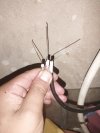
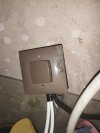
I AM SORRY IF PICTURES AREN'T GOOD.
I use a two way switch with two state.the first state for the receiver number one.and the second state for the receiver number two.
I AM SORRY IF PICTURES AREN'T GOOD.


- My Satellite Setup
- TM 5402HD
Sky+ UK.
- My Location
- Scottish Borders
No no no! Thats a recipe for all sortes of issues. Interference leaking in, short circuits, damage to the reciver and so on
Get an isolating A/B switch from amazon for about a tenner instead. Its a simple mechanial push sitch - Ive used them for years with no issues.
Get an isolating A/B switch from amazon for about a tenner instead. Its a simple mechanial push sitch - Ive used them for years with no issues.
anana
Member
- My Satellite Setup
- Lg TV 43 with built-in receiver
Echolink tornado receiver
- My Location
- Morocco
Well, I will follow your adviceNo no no! Thats a recipe for all sortes of issues. Interference leaking in, short circuits, damage to the reciver and so on
Get an isolating A/B switch from amazon for about a tenner instead. Its a simple mechanial push sitch - Ive used them for years with no issues.
Thank you

