Astra 2E: On Hold At 43.5E

Status
Not open for further replies.
Once it completes its temporary mission at 31.5E.

Wow the plot thickens :D

My understanding is that Astrium have control of this bird until it gets to its final intended position ( presumably 28.2E ) where SES take over and do their testing proceedure before lighting up and going live.

WHO has it when @31.5E????????????
 
31.5E? Where did that come from?
 

Attachments

  • Astra 1H Beacon 19.6E.webp
    Astra 1H Beacon 19.6E.webp
    35.2 KB · Views: 56
  • Astra 2E Beacon 43.5E.webp
    Astra 2E Beacon 43.5E.webp
    36.2 KB · Views: 56
motivated by those Scans of Llew I gave it a try with an old Icom radioscanner, which can receive 0.5 - 2450MHz. I fed in the IF with a splitter from the LNB, and it really worked for the 12493 MHz beacon. I can "hear" it using narrow FM, it sounds a bit like those computers in old Bond movies seerp seerp :D
It goes silent when I move the dish... so it has to be it. That's great, so I can follow it as well.
 
Excellent work Pietclock :D

Can you also receive the 11707.50V beacon with your rig?

The carrier amplitude is very low at my locality on both 2E beacons. Presumably as the footprint moves west my signal will increase.
 
I have been following this thread with interest and amazement with your knowledge, I do have a scanner but not sure what freq range it has, ive not used it for years. is this an hard task to learn please, any links would be great for me to have a read up on if anyone has any to hand thanks in advance for any help.
 
I didn't know that the 1L and 1KR may have some troubles. How do you know?
 
Once it completes its temporary mission at 31.5E.
SES have already confirmed via facebook that it's heading for 28.2E in Feb - unless you've a different source and a change of mission has been sought with the non-arrival of 5B?
 
I didn't know that the 1L and 1KR may have some troubles. How do you know?
If your receiver ranges up to at least 2 GHz or so, you can try as Pietclock has done, i.e take an output from your LNB.

The frequency to search for is 12493MHz - the LNB LO frequency (10600) = 1893MHz.
 
motivated by those Scans of Llew I gave it a try with an old Icom radioscanner, which can receive 0.5 - 2450MHz. I fed in the IF with a splitter from the LNB, and it really worked for the 12493 MHz beacon. I can "hear" it using narrow FM, it sounds a bit like those computers in old Bond movies seerp seerp :D
It goes silent when I move the dish... so it has to be it. That's great, so I can follow it as well.

Great stuff.

I assume you have connected the scanner to the splitter output that does not pass power or it could go pop.

I know the outputs are meant to be isolated but some scanners had very sensitive input stages, lightning and static arrestors were essential.
 
If your receiver ranges up to at least 2 GHz or so, you can try as Pietclock has done, i.e take an output from your LNB.

The frequency to search for is 12493MHz - the LNB LO frequency (10600) = 1893MHz.

But how do you dertermine a satellite has a problem of some sort? Can you read some data of the satellite or just by measuring the signal strength?
 
Can you also receive the 11707.50V beacon with your rig?

The carrier amplitude is very low at my locality on both 2E beacons. Presumably as the footprint moves west my signal will increase.

Just tried 11707.5 .... I get something there as well, but it sounds differently, it's a long feeeep sound, while on 12493 it's pulsating. Definitly different kinds of signals.
They are quite weak, although I am using a 125cm dish.
I also tried it on 19.2 east, I get something as well there, but not as "definite". I think the strong wide carriers there are too much for the radioscanner, and it cannot filter the weak narrow beacons out.

@hexah: yeah I used an Axing SVE2, it has diode protection.
 
I didn't know that the 1L and 1KR may have some troubles. How do you know?

http://sat-nd.com/failures/index.html?http://sat-nd.com/failures/a2100arrays.html

1L and 1KR are A2100 models as well...

So: http://www.ses.com/10260492/17_02_2012_FY2011-d

Page 6 of that it states:
Probleme mit der Funktionsfähigkeit von Satelliten
In der Satellitenflotte von SES gibt es derzeit elf Satelliten des Modells Lockheed Martin
A2100, bei deren Sonnenkollektoren es zu Anomalien kommen kann. Im Zuge einer strikten
Risikobegrenzungsplanung, einschließlich beschleunigter Ersatzbeschaffung, konnte die
potenzielle Auswirkung von Ausfällen im Großteil der Flotte deutlich verringert werden.

Translates: Problems with the functionality of satellites.

In the satellite fleet of SES there are currently eleven satellites of the model Lockheed Martin A2100, whose sun collectors can be subject to anomalies. In course of a strict risk containment planning, including accelerated replacement aquisition, potential effects of failures could be reduced in a large part of the fleet.
 
Thanks for the explanation!
 
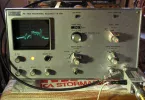
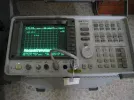
If I had My H/P Spectrum Analyzer working, I would have had a real go from the beginning at 2E but unfortunately it has developed some Errors about a year ago especially in the r/f section and being a laboratory equipment it will be too expensive to send to the factory for refurbishment.
This unit can handle from 30c/s to 26Ghz. Specially made for Satellite work.
 

Attachments

  • IMG_0823.webp
    IMG_0823.webp
    76.7 KB · Views: 78
1H is now stable
Astra1H.webp
 
Ni
If I had My H/P Spectrum Analyzer working, I would have had a real go from the beginning at 2E but unfortunately it has developed some Errors about a year ago especially in the r/f section and being a laboratory equipment it will be too expensive to send to the factory for refurbishment.
This unit can handle from 30c/s to 26Ghz. Specially made for Satellite work.
Nice analyser, I've got a HP Agilent 8590, covers L Band up to 1.8GHz, use for my terrestrial broadcast work.
 
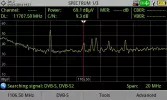
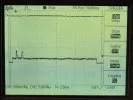
I found some non DVB-S signals to test some ancient test equipment on.
At 5E low band vertical something is transmitting pulses at different intervals.
11050 MHz is one frequency but there are others too. My big dish is fixed so
I can't track 2E but some day it will be motorised so why not test the rest of
the equipment now.

The main part is a panoramic receiver, 1 - 18 GHz. Not very good on sensitivity
and selectivity but robust. A splitter on the LNB-connection, a DC-block and
a preamp gives a useful readout but it's all analog so you have to calculate
frequency and span yourself. Setting sweep width to zero makes it a fast
signal strength meter so amplitude modulation can be detected.
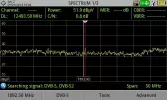
Hopefully I can get the smell of the bacon when 2E comes close to 28,x E.

Tek.webp
11050 MHz 5E low band vertical

PM7800.webp
28,4E low band vertical
 
Status
Not open for further replies.
Back
Top