Astra 2E at 28.2E: General Discussion Part 1

Status
Not open for further replies.
Yep - since the end of November we suspect!! I think we may now see some testing at the weekend, will be interesting to see if any of the 33MHz TP's are tested on the UK beam?

Why are the higher frequency transponders wider bandwidth, a legacy from the analogue days?
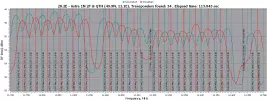
 
I've done a scan of the 33MHz transponders for comparison to 2E when it goes live. There are two very weak strange carriers on 12137V and 12432V.
 

Attachments

  • 28.2E-RFScan23.webp
    28.2E-RFScan23.webp
    157.8 KB · Views: 111
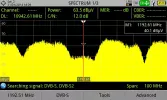
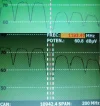
A constant carrier on 10942H.
 

Attachments

  • 10942H.webp
    10942H.webp
    33.9 KB · Views: 108
Why are the higher frequency transponders wider bandwidth, a legacy from the analogue days?
No. The needed bandwidth is related to symbol rate. Normally it is 35-40% more than the symbol rate.
 
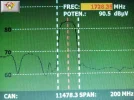
@solly: the two data carriers on 11,464H and 11,479V have been there for months now. Both 16,5 dB SNR here - they most likely are on the 1N PE beam.

Those aren't 1N PE1 but could be 1N PE2 as they are strong (17dB ) on my 80cm dish in Finland whereas I can't even see a blip from the 1N PE1 transponders on a 1.8m dish.
 
Is it possible to see a carrier on a digital sat receiver?
 
A constant carrier on 10942H.

I guess it's probably the lowest frequency they can use to check the UK spot beam without causing any interference to live transponders.
 
No. The needed bandwidth is related to symbol rate. Normally it is 35-40% more than the symbol rate.
With Astra it is a legacy of the analogue band plan isn't it?

i.e. the analogue broadcasts on Astra 1A to 1D had 26MHz of Bandwidth needing 16 transponders for 250MHz.

Along comes Astra 1E/1F and they decided to use 20 transponders to cover 400MHz spectrum so these are 33MHz wide (if these had been used for analogue TV it would have been rather wasteful).

Then as Sky turns off it's analogue transmissions digital services start in the old analogue bands, but squeezed between the analogue channels and on the same craft so forcing a slightly less efficient use on those bands. With the G band being the same size as the analogue bands it looks like they kept the 26MHz bandwidth there too.
For whatever reason SES Astra like consistency (i.e. the same transponders in use at three different orbital positions - 19,2'E; 23,5'E and 28,2'E) so while 28,2'E wasn't used for analogue television it's ended up following the same plan as 19,2'E.
 
The 26 / 33 MHz thing has nothing to do with analogue or digital. All analogue Astra channels were on 26MHz transponders, which was a SES "specialty" in the beginning - they used that as a compromise between quantity and quality, because a 26MHz wide analogue FM carrier was not of the same quality as a full 5MHz PAL carrier, which was the analogue terrestrial standard. For real studio quality, 36MHz transponders were necessary.
When SES launched their digital service in 1996, they again did some compromise using those 33MHz instead of 36MHz on Astra 1E and Band E...

I get anything on 10942H here.

@timo_w2s: yes I agree, they are 1N PE2, while those data carriers in Band C are 1N PE1...
 
For whatever reason SES Astra like consistency (i.e. the same transponders in use at three different orbital positions - 19,2'E; 23,5'E and 28,2'E) so while 28,2'E wasn't used for analogue television it's ended up following the same plan as 19,2'E.

The reason is interchangeability. So they can move the satellites around as a back up when needed and as they have done several times.
 
The reason is interchangeability. So they can move the satellites around as a back up when needed and as they have done several times.
And this is the main reason for European beams too. A satellite full of small UK spot beams would not be useful at other orbital positions that need to cover larger areas of Europe.

Expats and conspiracy theorists may disagree though...
 
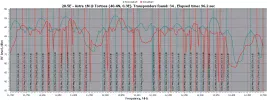
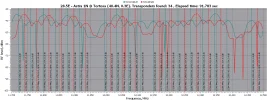
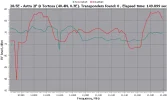
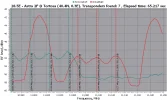
Here are scans taken in Tortosa for future comparison.
For interest would someone who has good reception of 2F on a 1.2M dish or less post a scan; I would like to compare it with the scan here.
On a 1.2M dish there is absolutely nothing, on a 1.9M Famaval there is (sorry it's 2F not 2E related).
 

Attachments

  • Astra 1N 1-2-14 1.2M Gibertini 28.5E-RFScan.webp
    Astra 1N 1-2-14 1.2M Gibertini 28.5E-RFScan.webp
    171.4 KB · Views: 87
  • Astra 1N 1-2-14 1.9M Famaval 28.5E-RFScan.webp
    Astra 1N 1-2-14 1.9M Famaval 28.5E-RFScan.webp
    156.1 KB · Views: 87
  • Astra 2F 1-2-14 1.2M Gibertini 28.5E-RFScan.webp
    Astra 2F 1-2-14 1.2M Gibertini 28.5E-RFScan.webp
    54.6 KB · Views: 97
  • Astra 2F 1-2-14 1.9M Famaval 28.5E-RFScan.webp
    Astra 2F 1-2-14 1.9M Famaval 28.5E-RFScan.webp
    78.8 KB · Views: 88
Should I be able to see anything for 10942H here on my Foxsat? - so far no signal or anything!
 
Should I be able to see anything for 10942H here on my Foxsat? - so far no signal or anything!
Afraid not. The carrier is still active at present on that frequency, as previously shown in my screenshot, but it's a very narrow unmodulated carrier, and cannot be seen other than with a fast-sweeping spectrum analyser.
 
From Madrid (Spain), 94cm motorized antenna. (1-2-2014 2:00)
Desde Madrid (España), antena de 94cm motorizada.
 

Attachments

  • 10942_31_1_2014_200Horas.webp
    10942_31_1_2014_200Horas.webp
    363.8 KB · Views: 100
  • 11479_DVB_S_31_1_2014_200Horas.webp
    11479_DVB_S_31_1_2014_200Horas.webp
    203.4 KB · Views: 116
Greetings to all ! I ask you that you are aware : the passage of the channels BBC / ITV will be the new frequencies , or stay the same ? The Big day will be on February 8 ? Thank you in advance !

Inviato dal mio GT-I9100 utilizzando Tapatalk
 
Status
Not open for further replies.
Back
Top