Inside surface of Feedhorn - Shiny or dull?

Hello Akisan,
Good thing the system still send notifications. As for an update here goes: So I changed the feedhorn for an Andrews, and purchased an invacom Single LNB, but with no noticeable improvement. I might just add that I also purchased an Inverto C120, there was less loss ont he 20m line, but once again I failed to pick up any new channels. I suspect my dish is not set up correctly, two parameters that I have to take a closer look at are: Height of dish from ground surface and also to ensure it has a clear view of the hozizon. As soon as I manage to get round to doing those two things, I may stand a pretty decent chance of some new channels. I am sorry I could not be more specific in reply to your question about the insude surface of the feedhorn, but I did read somewhere that it makes no difference at all, it should be clean and be free of bugs and cobwebs. That's about it really, if you hear any contrary remarks about this, I would be interested.
Take care and all the best,
Tom.
 
Hi TMBP,
Thanx a lot for ur reply.

I think the Andrews Feedhorn doesn't cover the WHOLE DISH but only a Part of it which makes me think that a bigger (maybe 15cm in Diameter) feedhorn is necessary

I've no problems with the inside of the feedhorn but rather the size of it as i think it's too small.

Hope someone else can come forward woth a few helpful remarks
 
akisan said:
Hi TMBP,
Thanx a lot for ur reply.

I think the Andrews Feedhorn doesn't cover the WHOLE DISH but only a Part of it which makes me think that a bigger (maybe 15cm in Diameter) feedhorn is necessary

I've no problems with the inside of the feedhorn but rather the size of it as i think it's too small.

Unlike a prime focus antenna, the scalar rings on an offset are housed within a horn. Whilst there are different sized horns out there, the larger ones are usually supplied for receive/transmit systems, where the illumination of the dish is more critical on the uplink stage. If the horn isn't capturing all the reflector has to offer, then either it is of the wrong type (f/d matching is important), in the wrong place (feed arms/elevation require adjustment ), or the reflector is warped.
 
Hello forum,

I've been following this thread for some time as I have the NSC 18-1 dish with the narrow feedhorn that came with.
I was told by a professional installer that I need Prodelin Feed Horn Ku Band 50 Degrees. Not sure if this is the correct feedhorn for my dish, I would like to know your opinion on this.
The dish was given to me by a friend who bought the package that included an LT-8700 receiver back in the '80s, so its an old model.

FYI, I had a invacom 031 LNB and when changed to Inverto black I had a definite signal improvement on SKY UK from Athens, Greece.
e.g. Where Sky Sports F1 would be lost some times during the day with the Invacom, it stays solid with the inverto with signal between 7.5 - 8.8.

Thank you for this very informative forum.
 
Six years of following ?

You will have to upload some images of the dish, rear and front to make a judgment. A 50 degree feed is from memory receive only, 39 and 51 degrees are for the receive /transmit options. They are available though.
 
Thanks for your reply Chnnel Hopper:)
6 years? I didn't now it was that long. LOL

The installer proposed the following feedhorn models:
0800-1290 RX/TX
0800-513 RX ONLY
I could not find the 2nd model though.
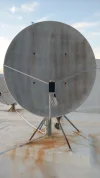
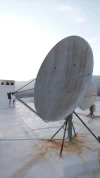
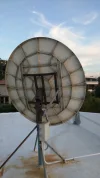
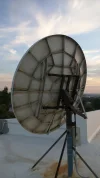
Here are some photos I took a while ago.

Thank you again.
 

Attachments

  • IMG_20160401_193028 [1600x1200].webp
    IMG_20160401_193028 [1600x1200].webp
    47.8 KB · Views: 30
  • IMG_20160401_193101 [1600x1200].webp
    IMG_20160401_193101 [1600x1200].webp
    45.1 KB · Views: 33
  • IMG_20160401_192946 [1600x1200].webp
    IMG_20160401_192946 [1600x1200].webp
    68.8 KB · Views: 29
  • IMG_20160401_193123 [1600x1200].webp
    IMG_20160401_193123 [1600x1200].webp
    61.2 KB · Views: 30
Hi @klik8 ! Nice dish you have!
Feed Horn Ku Band 50 Degrees
I am not sure I understand what "50 Degrees" stands for, but that could be only my problem of understanding.
FYI, this is short-focus dish with opening angle 87,6* and offset angle 26,7*.
You could try to install (just for experiment) Inverto Black Ultra Single LNB and measure the signal to compare to what you are getting now.
What else could be done to improve reception:
- check antenna's geometry. It could be not perfect. After shape-correction reception could improve lillbit;
- check whether LNB's Phase center is co-located with antenna's Focal point. After correcting this, reception might improve;
- check whether LNB is pointed to the correct point on the surface of the antenna. It also can improve the performance of your system.
- check all coax cables and connectors.

P.S. I have exactly the same dish and I like it :rolleyes:
 
Some of these old threads still have interesting things in them:

If you side mount a Panorama C band lnbf with a flat Scalar (Not Conical) you will get pretty good reception. NIX the C/KU LNBF combo.

Why would side-mounting an LNBF give better result with the flat scalar rings rather than a conical one?
I do see on other foras installations with flat scaler rings on offset dishes. But surely, the smaller opening angle of the reflector means a smaller opening angle on the feed-horn as well, regardless of where the LNB is mount wrsp to center-focus?

I would like to find out, as I am just about to order a C-band LNBF, and wonder what parts to order...
 
means a smaller opening angle on the feed-horn as well
Lets call this Illumination angle of the feedhorn. Or you mean physical angle of the feedhorn, that one which can be measured?
 
Lets call this Illumination angle of the feedhorn. Or you mean physical angle of the feedhorn, that one which can be measured?
Illumination angle, if you must.
The effective signal-guiding angle of the horn. I believe you have shown previously that this is not necessarily the same as the mechanical angle... :)
 
May I ask what feedhorn do you use on the same dish?
I used simple Universal LNB, something like IBU, it has integrated feedhorn. I was playing with this dish last summer and then put it away in the garage. So, it is not installed ATM.

Supposedly, my dish has been correctly aligned.
How can you be so sure about that?
 
I used simple Universal LNB, something like IBU, it has integrated feedhorn. I was playing with this dish last summer and then put it away in the garage. So, it is not installed ATM.

How can you be so sure about that?

Only because the professional installer adjusted it with his equipment. If he did not perform a good job I don't know.
 
And, of course, this professional installer did not check antenna's geometry. He did not check LNB's position and aiming. What he did- he got maximum possible signal by adjusting LNB's scew and it's position closer/further to the dish, antenna's azimuth and elevation. But if he was doing red highlighted, final result could be better.
 
@skomedal Did you want to say something smart or just copy-pasting and adding smiles :-ohcrap ?
 
Explain your theory in lay man terms so everyone ( amateurs ) can put them into practice.
 
This is not theory and explained many times in different threads of this forum. And it is self-explanatory anyway. Geometry of the dish- surface should be flat without any gaps between vertical and horizontal strings (if string test is done). LNB's Phase center should be co-located with antenna's Focal point. And LNB should be pointed at the right spot on the antenna's surface. Is that understandable or needs more shewing?
 
But is it for every day use for us amateurs/ semi proff dish mounters?

Ps How did it go with your bore sighter project?
 
Back
Top